

Mobile Spend Management: Approvals and Purchase Requests on the Go
Mobile spend management helps finance and procurement teams keep purchasing moving while staying aligned to policy. It brings the most time-sensitive parts of purchasing, such as purchase requests, approvals, and documentation, into a workflow that people can use wherever work happens.
This article focuses on mobile procurement to help with approvals and purchasing speed within the procure-to-pay process, and how these factors impact visibility and control in spend management.
Key Takeaways
Mobile spend management accelerates procure-to-pay by letting employees submit purchase requests and approvers act on them without waiting to be at a desk, reducing cycle time and preventing compliance gaps.
Spend under management increases when requests and approvals are easy to complete in the moment, giving finance teams visibility into committed spend before invoices arrive.
Mobile approvals reduce off-policy purchases by keeping policy enforcement tied to the request step before spend is committed, rather than relying on after-the-fact reconciliation.
Effective mobile spend management solutions integrate with accounting or ERP systems to keep purchasing activity, coding, and documentation connected to transactions without manual re-entry.
Mobile purchase requests and approvals in the procure-to-pay process
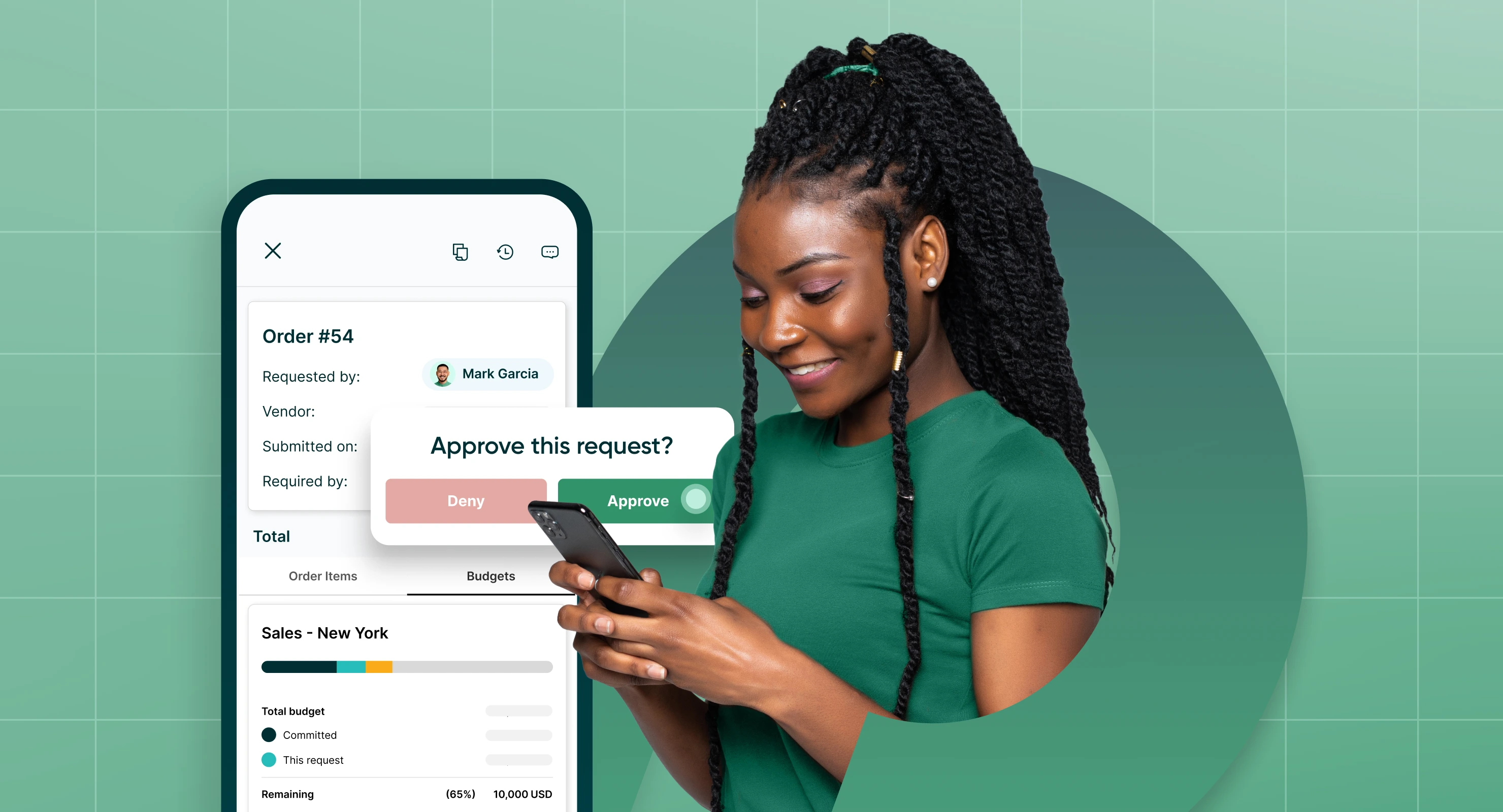
Mobile purchase requests and approvals accelerate the procure-to-pay process by letting employees submit requests and approvers act on them without waiting to be at a desk. This reduces cycle time, keeps spend visible from the start, and prevents workarounds that create compliance gaps.
The biggest impact shows up at the points where purchasing usually slows downmoments that shape whether spend starts inside the process or outside it.
It begins with purchase requests. When an employee identifies a needmaterials, services, or an urgent replacementthe best outcome is a request created immediately with enough context to review it properly.
If that request has to wait until the employee is back at a desk, it often turns into maverick spending: the purchase happens first, and the request becomes an afterthought.
Approvals are the next pressure point. Most delays aren’t caused by disagreement, but by missing information. Approvers hesitate when they can’t tell what the spend is for, whether it aligns with budget, or if documentation was reviewed.
Mobile workflows reduce that friction by making key details available in one place:
- Vendor and amount
- Category and department or job code
- Attachments and supporting documentation
With that context, approvals move without back-and-forth.
Documentation is another common breakdown. Quotes, photos, receipts, and notes are easiest to capture when the work is happening. Mobile access makes it more likely that information is attached at the source, rather than tracked down later. That consistency matters once requests turn into orders and invoices.
Getting these early steps right has a downstream effect. Clean requests and faster approvals reduce rework in the procure-to-pay process and make it easier for finance to track committed spend before invoices arrive.
When mobile supports these workflow moments, purchasing moves faster without loosening controls, and more spend stays visible and manageable from the start.
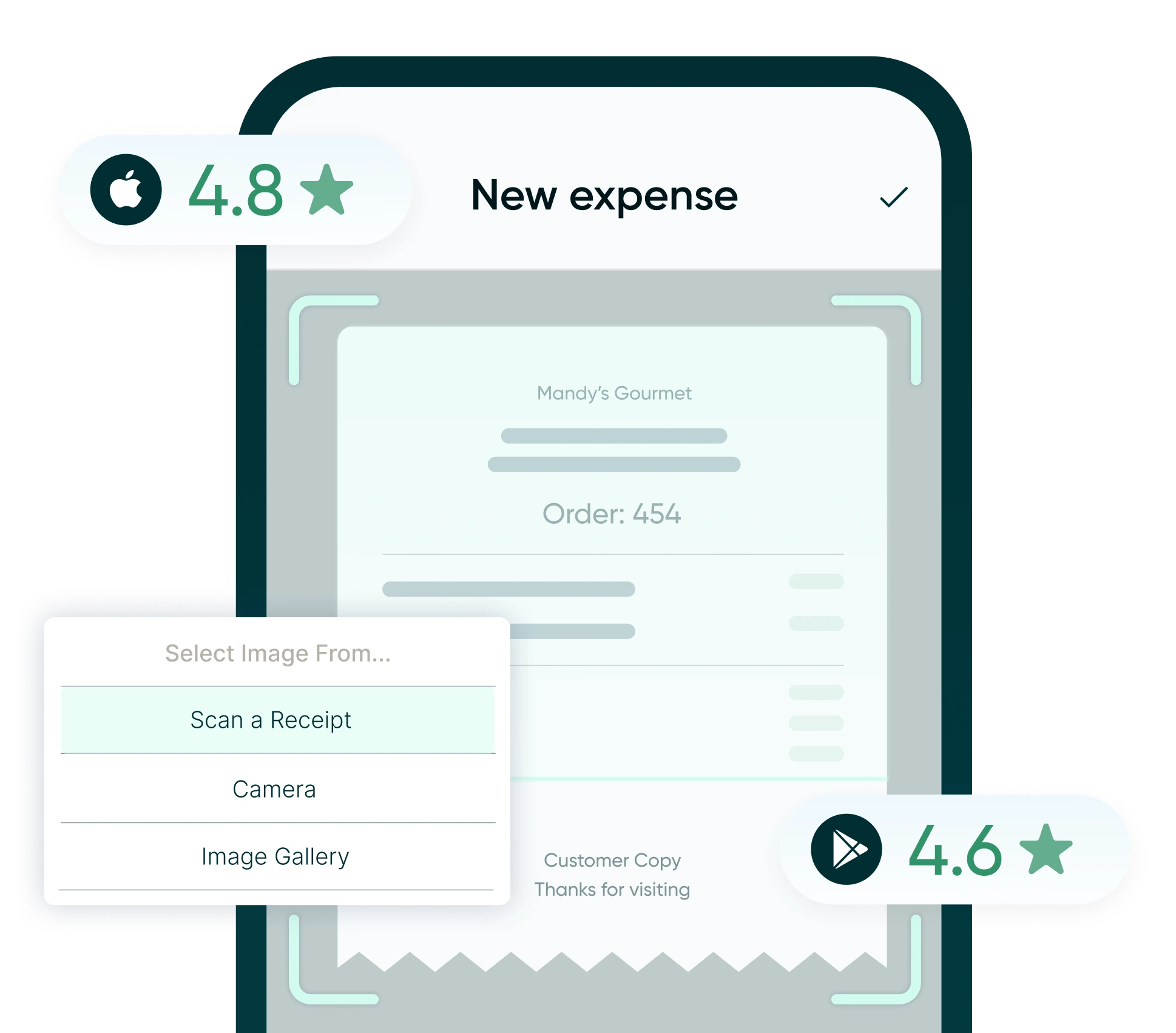
Keep purchasing moving, even when approvers aren’t at their desks
See how mobile procurement keeps approvals moving and spend under policy.
More spend under management and better decision-making
Spend under management refers to the portion of organizational spend that flows through approved procurement channels and is visible to finance. Mobile spend management increases that share by making requests and approvals easy to complete in the moment.
When fewer purchases happen outside the process, finance gains spend visibility into what’s been requested, approved, and likely to convert into invoiceswell before month-end.
As more requests move through the system, spend becomes easier to categorize, review, and track against budget. Finance teams gain visibility into what’s been requested, what’s been approved, and what’s likely to convert into invoiceswell before month-end. That earlier signal helps reduce surprises and supports more accurate forecasting.
This is where the broader benefits of spend management show up in practice. Higher adoption leads to cleaner data, fewer exceptions, and less time spent chasing documentation or correcting errors after the fact. Instead of reacting to spend after it happens, teams are in a position to guide it while decisions are still being made.
Once spend is consistently captured, teams can start to analyze it more effectively. Patterns that were previously buried become visible:
- Frequent small purchases that add up across department
- Repeated exceptions to policy
- Budget drift before month-end close
With the right tooling, finance can move beyond basic reporting toward insight-driven decision-making by leveraging AI spend analysis tools that automatically surface trends, anomalies, and opportunities for improvement.
The progression is straightforward: easier workflows lead to better data, and better data supports better decisions.
Reduce off-policy spend with mobile approvals
Policy compliance breaks down when the process is hard to follow in the moment. Someone is on-site, a request feels urgent, or the approver is out of officeso the purchase happens first and the paperwork follows later.
Mobile helps prevent that pattern by keeping policy tied to the request and approval stepnot to after-the-fact reconciliation. When requests are submitted through the purchase approval workflow before spend is committed, approvals become a control point instead of a cleanup step.
Approvers can see the details that mattervendor, amount, category, budget context, and supporting documentationand make a decision with confidence.
Mobile also makes it easier to catch issues early. If a request is missing documentation, exceeds a threshold, or involves an unapproved vendor, it’s visible while there’s still time to correct it. That reduces exceptions and avoids the “approved because it’s already purchased” dynamic.
A reliable audit trail comes naturally when the workflow is followed. Requests, approvals, and documentation stay connected to the transaction, so audits and compliance reviews rely less on chasing receipts and reconstructing decisions after the fact.
What to look for in a mobile spend management solution

For teams comparing solutions, mobile capability shouldn’t be evaluated in isolation. The question isn’t whether a tool has an app. It’s whether mobile supports the purchasing workflow end to end and makes it easier for people to follow policy in the moment.
Start with requests and approvals. A mobile solution should support:
- Request capture at the point of need: Employees submit with full contextvendor, amount, category, department or job code, and documentation.
- Fast but informed approvals: Approvers see what they need to act without chasing details.
- Consistent routing rules: Workflows apply policy automatically without manual intervention.
- Complete audit trail: Every request, approval, and attachment stays connected to the transaction.
Integration is the second filter. Mobile approvals and requests only improve control if the data stays connected to your accounting or ERP system without manual re-entry. Otherwise, you end up reconciling two versions of reality: what was approved in the purchasing workflow and what eventually shows up in finance.
A good solution keeps purchasing activity, coding, and supporting documents tied to the transactionso reporting and audits don’t depend on cleanup.
If you’re assessing options, this spend management software buyer’s guide breaks down what to prioritize for mid-market teams, including workflow design, adoption, and long-term scalability.
Mobile spend management, in practice
Mobile spend management works when it removes friction from purchasing without weakening controls. Requests are submitted when the need arises, approvals move with enough context to make sound decisions, and documentation stays connected to the transaction.
| Workflow Moment | Without Mobile | With Mobile | What This Actually Means |
|---|---|---|---|
| Purchase requests | Delayed until employees are back at a desk; workarounds are common | Submitted immediately with full context | Requests happen when the need is identified, not hours later — reducing missed details and off-process purchases |
| Approvals | Stalled by missing info or out-of-office delays | Completed on the go with decision-ready details | Faster approvals mean fewer bottlenecks and less pressure to bypass the process |
| Documentation | Tracked down after the fact | Captured and attached at the source | Cleaner records and fewer gaps, reducing time spent chasing receipts or correcting errors |
| Spend visibility | Seen after invoices arrive | Visible before spend is committed | Finance can catch issues early instead of reacting later — improving control and forecasting |
| Policy compliance | Often enforced after purchases are made | Built into the request and approval flow | Fewer off-policy purchases and less rework for finance teams |
For finance and procurement teams, the result is practical. Fewer purchases happen outside the process. Exceptions are caught earlier. Spend is visible before invoices arrive, not after reconciliation begins. Over time, that consistency reduces rework across procurement and AP and makes reporting more reliable.
The value isn’t in having a mobile app. It’s in supporting the moments where purchasing usually breaksand keeping spend inside the workflow when decisions are still being made.
Questions finance teams have about mobile spend management
Why do approvals get delayed when teams are away from their desks?
Approvals often stall because requests are tied to desktop systems or email threads. When approvers are traveling, in meetings, or managing multiple priorities, they simply don’t see requests in time. Mobile access removes that gap by letting approvers review and act on spend as it happens, not hours or days later.
How does mobile spend management help prevent “after-the-fact” purchases?
A lot of off-policy spend happens because it’s faster to just make the purchase and deal with approvals later. Mobile spend management flips that dynamic. When it’s just as easy to submit and approve a request on the spot, employees are far more likely to follow the process instead of bypassing it.
What actually changes for finance teams when approvals happen in real time?
Finance teams move from chasing receipts and correcting issues after the fact to guiding spend before it happens. That means fewer surprises at month-end, cleaner data, and less time spent fixing mistakes that could have been prevented earlier.
Is mobile access enough to fix spend control issues?
Not on its own. Mobile access helps remove friction, but it only works if it’s tied to clear workflows, policies, and visibility. Without that, you’re just moving the same problems onto a smaller screen.
Where does mobile spend management make the biggest difference?
It’s most impactful in situations where spending decisions happen away from a desk—field teams, multi-location organizations, fast-moving operations, or companies where approvers are frequently unavailable during the day.
What’s the risk of not having mobile spend management?
The biggest risk is delay. Delayed approvals lead to workarounds, off-policy purchases, and poor visibility. Over time, that creates gaps between what was approved, what was spent, and what finance actually sees.
If you want to see how mobile purchase requests and approvals fit into a complete procure-to-pay workflow, explore mobile procurement.
$30B+ in real spend data you won’t get anywhere else
Find out what it takes to move from reactive to AI-driven operations.


