

Nonprofit Procurement: Challenges, Benchmarks, and Key Insights
Procurement plays a central role in how nonprofits manage resources, maintain compliance, and deliver their mission. This article outlines the core components of nonprofit procurement, the challenges organizations face, and the sector benchmarks shaping procurement performance.
Nonprofit procurement is the process of requesting, approving, purchasing, and documenting goods and services in alignment with grant rules, audit standards, and funder requirements. It includes requisitions, purchase orders, vendor management, invoice processing, and real-time budget visibility across programs and grants.
Key Definitions
- Procurement: How nonprofits request, approve, and purchase goods and services.
- Purchase Order (PO): A pre-approval document that enforces budget control and supports audit trails.
- Invoice Processing: Coding, matching, approving, and paying invoices.
- Grant Purchasing Requirements: Funder rules for allowable spend and documentation.
- Budget Visibility: Real-time insight into spending across programs and grants.
- Vendor Management: Onboarding, evaluating, and consolidating suppliers
What is nonprofit procurement?
Nonprofit procurement spans the full intake-to-pay workflow—from purchase requests and approvals to vendor management, invoice processing, and spend reporting.
Nonprofits face constraints that most corporate environments never do:
- Grant and funder restrictions
- Uniform Guidance requirements
- Program-specific budgets
- Documentation-heavy audit processes
- Strict reporting timelines
- Board, donor, and community oversight
These pressures make procurement more than a process — it’s an accountability system. When it works, programs run smoothly. When it breaks, teams feel it fast.
Many organizations formalize these expectations through internal purchasing guidelines, a practice reflected in broader nonprofit purchasing policy considerations, which help ensure consistency across teams.
Across the sector, these patterns align with the operational realities found in many nonprofit spend management environments, where program growth, funding oversight, and administrative capacity place increasing demands on procurement processes.
Common procurement challenges charitable organizations face
Procurement issues can surface quickly, especially for those managing multiple grants, programs, and funders.
Slow Approvals
Requests stall when approval ownership is unclear. Benchmark data shows a median requisition-to-PO time of 6.45 hours, often longer in decentralized teams.
Manual Purchasing Workflows
Email chains and spreadsheets create missing documentation, inconsistent coding, and approval confusion. Smaller nonprofits are most affected.
Vendor Sprawl
Only 19.48% of total spend goes to the top five vendors in the benchmark dataset. Too many vendors = more work, less leverage, and inconsistent pricing.
Heavy AP Workloads
Invoices take an average of 64.68 hours to complete. Slow AP means reporting delays, slower month-end close, and compliance risks.
Limited Grant and Budget Visibility
Teams lack clarity on committed vs. available funds. Overspending often appears late, after the budget has already been exceeded.
Documentation Gaps
Missing receipts, inconsistent coding, and incomplete approvals create chaos during audits and make month-end close harder.
Complex Compliance Rules
Uniform Guidance, price reasonableness, competitive bidding thresholds, and funder-specific requirements add complexity to already stretched teams.
These operational challenges mirror patterns seen across nonprofit purchasing practices, reflecting the need for more structured, transparent procurement processes.
Nonprofit procurement benchmarks
The Nonprofit Procurement Benchmark Snapshot reveals how real mid-sized not-for-profits perform across key workflows.
Requisition-to-PO Cycle Time (6.45 hours) – indicates where approvals bottleneck or thresholds aren’t defined clearly.
Invoice Processing Time (64.68 hours) – this equates to an average of three business days, further adding to month-end delays and compliance pressure.
Catalog-Based Purchasing (47.64%) – almost half of purchases are made as ad hoc buying, missing negotiated pricing or preferred supplier lists.
Average Spend per Vendor ($12,069) – vendor fragmentation is high, making oversight and negotiation difficult.
Spend Concentration (19.48% with top 5 vendors) – most organizations manage too many suppliers to maintain consistent pricing or accountability.
Signs your procurement process needs improvement
Together, these benchmarks help organizations assess where they stand and identify opportunities for stronger controls, greater visibility, and better financial stewardship.
If any of these sound familiar, your process isn’t working the way it should:
- Approvals are slow, inconsistent, or unclear
- Teams rely on email or spreadsheets
- Spend isn’t visible by grant, program, or department
- Vendors are duplicated or unmanaged
- Invoice processing takes days or weeks
- Documentation is scattered across inboxes and folders
- POs aren’t used or are inconsistently applied
- Staff constantly chase receipts and coding fixes
These symptoms signal workflow gaps that increase compliance risk and drain staff capacity, especially during audits.
Why strong procurement practices matter
Procurement plays a central role in how nonprofits protect their budgets, manage compliance, and maintain trust with funders and stakeholders. When purchasing workflows are consistent, documented, and visible across programs and grants, teams can operate with confidence and make timely, mission-aligned decisions. When they’re not, delays, overspending, and audit challenges surface quickly — impacting programs and financial reporting.
Understanding how your organization compares to others in the sector can help clarify where friction exists and where improvements will have the greatest impact. Procurement benchmarks offer a meaningful reference point for assessing process health and identifying opportunities to strengthen financial stewardship.
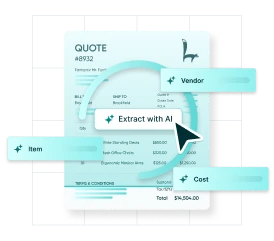
Preview AI Intake for Orders
Take the product tour to see how the new intake experience works.