


Charter School Cost Control Starts With Spend Visibility
Cutting costs is easy to say and hard to do, especially in charter schools where overspending rarely comes from one obvious line item. It is usually the accumulation of everyday decisions, such as last-minute purchase requests, using multiple vendors for the same category, and low-dollar buys that do not feel risky in the moment. Over time, those quick calls quietly erode spend control.
Budgets and enrollment remain the top concerns for most school leaders. When either one shifts, the pressure shows up immediately in how tightly spending can be managed week to week. That is why a single cost-cutting push rarely fixes the root problem.
For many growing charter schools, the better starting point is less flashy but far more effective. It begins with a purchasing process that makes spending easier to control, easier to explain, and harder to bypass.
This article draws on conversations and insights from Daniel Casselli, President of BuyQ—a national group purchasing organization (GPO) serving charter and private schools and a Procurify referral partner.
Charter school purchasing challenges
Charter school purchasing is difficult because schools operate with tight margins, decentralized decision-making, and limited room for error. Unlike traditional districts or most businesses, charter schools combine campus-level autonomy with centralized financial accountability. Campuses need the freedom to move quickly, while finance teams remain responsible for budgets, grants, and audits across the organization. Those tensions have become more pronounced in a more normalized but less forgiving financial environment, where federal policy shifts can introduce additional uncertainty around funding rules, oversight expectations, and the timing of grant programs.
More spending has to be supported by core per-pupil revenue, which can be fixed, delayed, or uneven across campuses. Enrollment patterns also continue to shift by region, grade level, and operator. Even when total enrollment is stable or growing, forecasting becomes harder at the campus or program level, which increases reliance on short-term purchasing decisions to meet immediate needs.
At the same time, charter schools have limited flexibility in their biggest costs. Facilities are high and largely fixed, and staffing has reset at a higher baseline. That leaves purchasing as one of the few levers schools can adjust in the short term, which increases pressure on controllable categories such as supplies, technology, services, and maintenance.
Buying also happens in a distributed way. Campuses and roles need to move quickly, while finance and accounts payable stay centralized and are sometimes supported by a back-office provider. The result is that purchases run through different tools, vendors, and approval paths.
When budgets are tight and planning is less predictable, that gap gets expensive. Off-contract buying increases, the vendor list grows, invoices arrive with limited context, and spend becomes harder to control track by campus, grant, or program. The issue is not intent. It is visibility and control.
That is why purchasing, not budgeting alone, becomes the pressure point. Without consistent purchasing processes and clear ownership, schools end up trying to regain control after funds have already moved.

Sources: 1. U.S. Department of Education – Education Stabilization Fund; 2. NEA Analysis of U.S. Bureau of Labor Statistics 3. Edunomics Lab; 4. Trading Economics.

Education Benchmark Report
If you’re responsible for spend, efficiency, or accountability in your school—this report was made for you.
How to get spend visibility in charter schools
Even schools facing the same macro pressures can be dealing with very different constraints. Before you adjust purchasing, it helps to get clear on what is actually driving pressure in your model.
A quick diagnostic:
- Is enrollment trending up or down?
- Is facility debt service fixed or variable?
- Are you struggling to add FTEs or reduce them?
- How has funding affected recurring expenses?
Those answers change what’s realistic, what can move quickly, and where risk shows up first. From there, the next step is to look at how spending decisions are happening day to day. Budget versus actuals shows the result. Purchasing data shows the path that created it.
Start by asking:
- How many vendors are we using for the same category?
- How long does it take to move from request to purchase?
- Where are approvals slowing things down?
- Which purchases happen outside standard paths?
- Where are small, recurring purchases adding up?
For many schools, that spend visibility is limited because the data is incomplete or spread across systems. But even a basic view tends to surface practical fixes that reduce AP rework and strengthen controls without slowing campuses down.
What effective purchasing looks like in practice
Once you understand your constraints and how spending decisions are actually being made, the goal isn’t to slow people down or centralize every purchase. It’s to reduce unnecessary variation and make the path to buy clearer for everyone involved.
In practice, that means standardizing how common purchases happen without dictating every choice. Campuses still decide what they need, but they buy through approved vendors, consistent pricing, and defined approval rules. The decision stays close to the classroom, while finance stays connected to the spend before the money moves.
When purchasing follows a consistent path, the downstream effects show up quickly. Requests are easier to review because the context is already there. Invoices are easier to process because they match what was approved. Spend is easier to track by campus, grant, or program because the data is captured upfront, not reconstructed later.
Just as importantly, finance shifts from chasing information after the fact to supporting better decisions in real time. The goal isn’t tighter control for its own sake. It’s fewer surprises, cleaner reporting, and more confidence that spending aligns with priorities, even when conditions change.
The building blocks of a controlled purchasing process
Creating a consistent purchasing path isn’t one big change. It’s a few practical elements working together so schools can move quickly without losing visibility.
Start with the basics:
- Clear buying paths by category so common purchases run through a standard route instead of being reinvented by each campus.
- Preferred vendors and pricing so staff can buy fast without creating unnecessary vendor sprawl or off-contract spend.
- Approval workflow rules that match how decisions actually get made, with thresholds that reflect campus needs and budget accountability.
- Good purchase context captured upfront with AI-powered intake, so invoices are easier to match and code, and spend can be tracked by campus, grant, or program without cleanup.
- A repeatable way to review patterns so leadership can spot where workarounds are happening and fix the process instead of policing people.
When those pieces are in place, finance doesn’t need to rely on after-the-fact enforcement. The process does more of the governing on its own, and teams get a faster, clearer way to buy what they need.
Real Life Example: At New Braunfels Christian Academy, creating a more consistent purchasing process helped reduce approval times from 49 hours to 7 hours, improve invoice processing speed from 5 minutes to 30 seconds, and increase PO-backed billing to 98%. That gave the school stronger day-to-day visibility into spending without adding friction for staff.
Conclusion
If you want to improve spend control, don’t try to fix everything at once. Pick one category that generates frequent purchases across campuses, define the preferred path, and hold it steady long enough to learn from it.
What you see in that one lane will tell you where the real friction is: unclear approvals, too many vendors, missing context, or workarounds that have become normal. Fix those points, then expand category by category. That’s how purchasing becomes controllable without becoming slow.
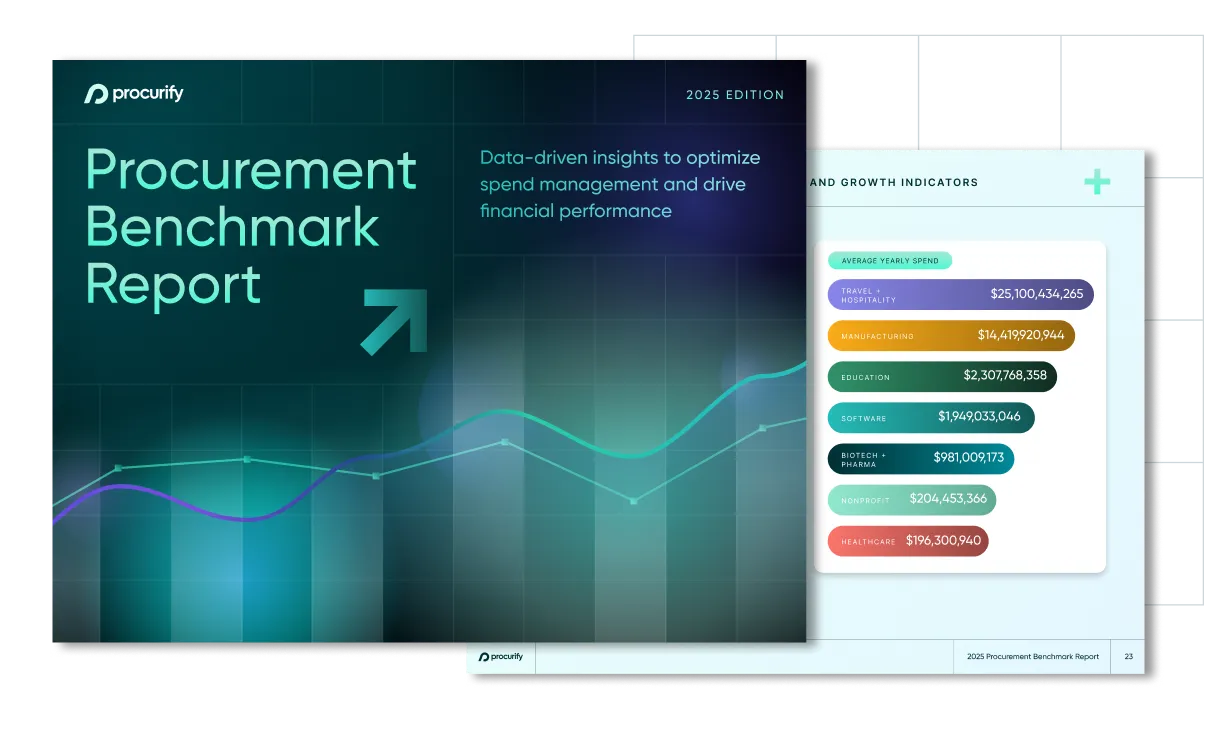
2025 Procurement Benchmark Report
Powered by $20B+ in proprietary data you won’t find anywhere else.


