

Mid-Market Lessons Learned on Adopting AI for Procurement
At Pulse 2025, leaders from PSC Group, Questrade, and BASIS Ed shared how they’re putting AI for procurement to work in real, measurable ways in the expert panel, AI Readiness in Procurement: Hype, Hope, or Here?
Their message was simple: AI readiness isn’t about having the most advanced tech—it’s about having the right foundation and learning lessons along the way. To drive company-wide adoption of AI for procurement means rallying around the problems you’re trying to solve, testing, learning, and iterating to arrive at scalable solutions.
And teams that trust their data, streamline processes, and empower people to work smarter are already seeing results. They shared their experiences with finding the right AI procurement strategy, what they wish they would have done differently, where they’re pivoting, and what’s next.
Start by identifying a clear use case to open the door
For Alex Costa, Senior VP of IT and Security at PSC Group, AI adoption wasn’t about chasing a trend—it was about solving a problem.
“Instead of just adopting AI, we identified a use case and asked, ‘Okay, how can we leverage AI to address a specific need or this specific gap?’” Costa shared.
With a small IT team and growing workloads, PSC began by automating infrastructure monitoring. The result was more uptime, faster response times, and less manual effort. From there, the door opened to explore AI in finance and operations.
The pressure to scale for Damon Norris, VP Finance at BASIS Ed, was familiar: education funding is fixed, but expectations keep rising.
“We started trying to figure out how to get teams to manage agents and use the AI to help do some of the work—as the old adage goes, ‘work smarter, not harder’—to really optimize our teams so they can get more work done,” said Norris. “This may mean they’re not touching every invoice, for example, if it can flow through, and figuring out when to add the human interaction.”
By automating purchase approvals and spend reviews, his team has reclaimed time for strategic planning and analysis. The change meant freeing people from manual tasks to focus on value-add work.
Building trust in AI and automation
Trust came up several times throughout the discussion—and for good reason. Norris admitted his finance team was initially hesitant to rely on AI, a sentiment that’s likely familiar to any organization in the early stages of its AI in procurement transformation journey.
“We’re a team of control freaks,” laughed Norris. “We want to make sure everything’s right so getting people to trust the AI is always the key. But every day is a step forward as we look to turn on more AI power.”
He also advised that use of AI in procurement shouldn’t be a top-down imposition but a company-wide approach where there’s buy-in precisely because everyone feels like they have a voice, are empowered to share feedback, and feel truly informed.
Small, visible wins—like faster approvals or fewer invoice errors—helped his team see the value firsthand. Over time, trust is turning into habit, and habit into readiness.
Data visibility that changes the game
At Questrade, instant, automatic visibility was the turning point. Elizabeth Parish, Director of Vendor Management, described how having real-time insight into approvals and spend transformed efficiency.
“We’ve been looking for anywhere that we can create efficiencies and be an expansion of someone’s role,” said Parish. “When it comes to procurement, it’s the sheer volume and being able to leverage [a tool like Spend Insights] to automate or find information without needing to ask someone to export data, really saves time, and you can be assured that it’s accurate data.”
Visibility into time-to-approve trends was another game-changer for Parish’s team. Suddenly, consistent bottlenecks became clear, freeing up more time to focus on a solution. What once took days of manual data gathering now happens instantly, empowering leaders to act faster. That confidence in data—and in the system—is what moves teams from AI experimentation to everyday use.
Guardrails that enable speed
Costa’s unique perspective as a security leader was especially instructive on the topic of governance as an accelerator instead of a barrier.
While rolling out new AI tools, PSC Group trained employees on data handling and implemented clear safeguards to ensure a solid level of understanding and enablement.
“We implemented the technology that’s required to keep things secure, but we’re also pushing different training and education to our folks to make sure that they’re using the technology properly,” said Costa. “You have to train them and give them the proper tools and the right procedure.”
“With the right guardrails, you actually move faster,” he said. “Everyone knows what’s safe, what’s not, and how to experiment responsibly.”
That structure lets teams innovate with confidence instead of hesitation.
It also allows other functional units to see IT teams not as blockers—which can sometimes be the default perspective—but as partners committed to balancing safety with AI agility.
“IT kind of gets the bad rap for slowing stuff down. Well, procurement also does,” said Norris. “And now we’re standing shoulder-to-shoulder with IT, and we know the questions before they’re even asked, because we’ve worked on these things before.”
Measuring ROI beyond cost
When the panelists talked about ROI, two things every team wants more of dominated: time and focus.
For Parish, every minute saved on manual approvals is time reinvested in strategic work relationships. For Norris, automation has meant redistributing employee capacity towards highly-skilled work.
“As we look at AP, and as we adopt more and more of the automation process and the AI that comes with Procurify that can simplify that track, it’s going to free up hours of time for our staff,” said Norris. “That means potentially either promoting them out of an entry-level job, retraining them or offering something better for their career.”
The takeaway? AI’s return on investment isn’t only financial, it’s cultural. It’s about empowering people to do better work with the same resources.
AI for procurement: The road ahead
All three leaders agreed the future of AI for procurement is autonomous, but not impersonal.
“AI should be an extension of the team,” clarified Parish. “We don’t want any resources to think that this is going to replace their jobs. When it’s working, it’s about, ‘Can I have this running, doing redundant, mundane tasks while I do this other thing?’ So you’re not replacing a resource, but maybe you don’t need to add five new resources that year.”
That vision isn’t far off. But it all starts with readiness, the groundwork that enables top AI tools for procurement to drive consistent value at scale.
What readiness looks like
Here are a few signals your organization is ready to move from hype to impact:
- Your team trusts the data they see every day.
- You’ve identified at least one manual process to automate.
- You’ve built guardrails for governance and compliance.
- Your team is curious—not fearful—about AI’s role in their work.
If you’re not there yet, it’s not too late to start. Explore the three phases of becoming an AI-first finance org to identify where you are and how to move forward with confidence.
See AI readiness in action
Organizations like Questrade, BASIS Ed, and PSC Group are using Procurify to connect data, automate approvals, and uncover insights in real time.
If your team is ready to operationalize AI in procurement, now’s the time to take the mid-market lessons and AI uses cases in procurement and turn them into action at your organization.
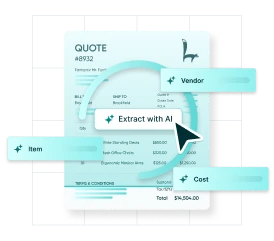
Preview AI Intake for Orders
Take the product tour to see how the new intake experience works.