

5 Best Procure-to-Pay Software Solutions to Streamline Procurement
Procure-to-pay (P2P) software helps organizations manage purchasing, approvals, invoicing, and payments in a single system. It replaces manual processes and disconnected tools with automated workflows that improve visibility, control, and accuracy across the entire procurement cycle.
Many organizations still rely on spreadsheets, email approvals, and separate systems for procurement and accounts payable. This leads to delays, duplicate data entry, invoice errors, and limited insight into spending — all of which increase costs and compliance risk.
Modern procure-to-pay platforms solve these challenges by automating approvals, matching invoices to purchase orders, and centralizing spend data. Many solutions now extend from intake to pay, connecting request intake, sourcing, procurement, and payments into a single continuous workflow.
In this guide, we compare the best procure-to-pay software solutions, including their key features, strengths, and ideal use cases, to help you choose the right platform for your organization.
Must-have features in procure-to-pay software
Modern procure-to-pay software should support the full purchasing lifecycle, from purchase request to invoice payment, while improving spend visibility, approval control, and cross-team efficiency.
-
Purchase requisition and purchase order management
The software should make it easy to create, approve, and track purchase requests and purchase orders within a single system. Look for configurable approval workflows, budget checks, and clear status tracking to reduce delays and improve compliance.
-
Invoice processing and accounts payable automation
Strong P2P software should automate invoice capture, invoice matching, approvals, and payments. Features like two-way or three-way matching help reduce manual entry, prevent duplicate invoices, and improve accuracy during month-end close.
-
Supplier management and collaboration
A good platform should centralize supplier information, onboarding, communication, and performance tracking. This helps teams maintain cleaner vendor records, reduce onboarding friction, and improve supplier relationships over time.
-
Spend analytics and reporting
Real-time dashboards and reporting tools help organizations track spending by department, vendor, category, or budget. The best platforms make it easier to control company spend, spot trends early, and make better purchasing decisions.
-
ERP and accounting system integrations
Procure-to-pay software should integrate with ERP and accounting systems such as QuickBooks, NetSuite, Microsoft Dynamics, or Sage Intacct. Strong integrations reduce duplicate entry, improve data accuracy, and keep procurement and finance aligned.
-
Audit trails and compliance controls
The best P2P platforms maintain a complete record of requests, approvals, invoices, and payments. Built-in policy controls and audit trails help reduce risk, support internal governance, and make audits easier.
What makes the best procure-to-pay software?
Not all procure-to-pay platforms deliver the same level of value. The best software does more than check off feature boxes. It helps teams move faster, stay compliant, and gain better control over spend without adding complexity.
When comparing platforms, look beyond whether a feature exists and focus on how well it works in practice.
-
Workflow flexibility
Strong P2P software should support approval flows, budget controls, and purchasing rules that match how your business actually operates. Rigid workflows create workarounds. Flexible ones improve compliance without slowing teams down.
-
Integration Quality
A platform may claim ERP or accounting integrations, but the real question is how seamless and reliable those connections are. Strong integrations reduce duplicate entry, improve reporting accuracy, and help procurement and finance stay aligned.
-
Ease of use
If requesters, approvers, and finance teams find the system difficult to use, adoption will suffer. The best platforms make common procurement tasks simple, intuitive, and accessible across desktop and mobile.
-
Visibility and reporting
The best tools give teams a clear view of spend in real time, not weeks later. Look for dashboards, budget tracking, audit trails, and reporting that help teams act quickly and confidently.
-
Supplier and AP coordination
The strongest platforms do not treat procurement and accounts payable as separate processes. They connect requests, orders, invoices, suppliers, and payments in one workflow, reducing friction across the full spend lifecycle.
-
Scalability and speed to value
Some systems require long implementations and heavy admin support before teams see results. Others are easier to roll out and scale as the business grows. The right choice depends on your complexity, resources, and timeline.
Top procure-to-pay software solutions
The best procure-to-pay software platforms help organizations manage purchasing, approvals, invoicing, supplier activity, and spend visibility in one system. The right fit depends on your company’s size, process complexity, ERP environment, and reporting needs.
Below is an easy comparison of leading procure-to-pay software solutions, including key features, strengths, limitations, and best-fit use cases.
| Procure-to-Pay Software | Key Features | Pricing | User Ratings | Best For |
|---|---|---|---|---|
| Procurify | • Purchase requisitions and purchase orders • AP automation and invoice processing • Automated approval workflows • AI-assisted intake • ERP integrations |
Custom pricing | 4.6/5 (320 reviews on G2) | Mid-sized businesses and scaling teams |
| Coupa | • Strategic sourcing • Procurement management • Expense management • Invoicing |
Custom pricing | 4.2/5 (561 reviews on G2) | Mid-market to enterprise organizations |
| SAP Ariba | • Supplier management • Procurement • Spend analysis • Invoice management |
Custom pricing | 4.1/5 (743 reviews on G2) | Enterprises with complex procurement needs |
| Oracle Procurement Cloud | • Self-service procurement • Supplier portal • Contract management • Sourcing |
Custom pricing | 4.1/5 (38 reviews on G2) | Large organizations using Oracle ERP |
| JAGGAER | • eProcurement • Supplier management • Spend analytics • Inventory management |
Custom pricing | 4.3/5 (29 reviews on G2) | Industry-specific and complex procurement environments |
User ratings sourced from G2 as of March 2026 and may change over time.
Procurify: Best Procure-to-Pay Software for Mid-Sized Businesses
Procurify is a procure-to-pay platform designed to help organizations manage requests, approvals, purchasing, accounts payable, and spend visibility in one centralized system. It combines automation, budget tracking, supplier management, and ERP integrations in a user-friendly experience geared toward mid-sized teams.
Key features:
-
Purchase requisitions and purchase orders: Create, submit, and approve purchase requests and purchase orders with AI-assisted intake and auto-filled line items from uploaded quotes.
-
Flexible approval workflows: Build approval chains based on spend thresholds, departments, budgets, or project types.
-
AI-powered procurement automation: Automate repetitive tasks across the procure-to-pay cycle, including invoice data extraction and three-way matching.
-
Supplier management: Centralize supplier information, terms, and performance data to improve visibility and reduce onboarding friction.
-
Real-time visibility and spend insights: Use AI-powered Spend Insights to analyze spending patterns, monitor budget performance, and identify risks earlier with natural-language questions and visual reporting.
Pros:
-
Easy to use: Designed for everyday requesters, approvers, and finance teams, not just procurement specialists.
-
ERP integrations: Connects with accounting and ERP systems such as QuickBooks, NetSuite, and Sage Intacct.
-
Mobile access: Lets users manage requests, approvals, and budgets on the go.
-
Automation and visibility: Combines approval automation, invoice processing, and spend analysis in one platform.
Cons:
-
Custom pricing: Pricing is not publicly available and requires contacting the vendor for a quote.
Pricing:
Custom pricing based on company size, usage, and implementation needs. Ask us.
Ideal user base:
Procurify is best suited for mid-sized organizations that want stronger spend visibility, easier purchasing workflows, and accounts payable automation without the complexity of a heavily customized enterprise system.
2. Coupa: Best for enterprise spend management
Coupa is a business spend management platform that helps organizations manage sourcing, procurement, invoicing, expenses, and payments in one system. It is best known for its broad functionality and suitability for large organizations with complex spend management needs.
Key features:
Strategic sourcing: Manage sourcing events, supplier participation, and procurement decisions.
Procurement: Support requisitions, purchase orders, and purchasing workflows.
Invoicing: Automate invoice capture, matching, and processing.
Expense management: Track and manage employee expenses alongside broader spend activity.
Pros:
Broad platform coverage: Supports multiple areas of spend management in one system.
Reporting capabilities: Offers visibility and reporting across procurement and finance activity.
Cons:
Implementation complexity: Setup and rollout can be time-consuming for some organizations.
Higher cost: May be less suitable for smaller businesses with simpler requirements.
Pricing:
Custom pricing; contact vendor for a quote.
Ideal user base:
Best suited for large enterprises looking for a broad spend management platform with sourcing, procurement, invoicing, and expense capabilities.
3. SAP Ariba: Best for global supplier networks
SAP Ariba is a cloud-based procurement platform that helps businesses manage purchasing, suppliers, invoicing, and spend analysis. It is often used by enterprises that need strong supplier network capabilities and global procurement support.
Key features:
Procurement: Support requisitioning, ordering, and receiving goods and services.
Supplier management: Manage supplier onboarding, risk, and performance.
Invoice management: Automate invoice processing and payment workflows.
Spend analysis: Analyze spending data to improve visibility and control.
Pros:
Supplier network: Provides access to a large supplier network and collaboration tools.
Enterprise scalability: Supports complex procurement operations across large organizations.
Cons:
User experience: The interface may feel less intuitive than some competitors.
Integration challenges: Connecting with existing systems may require added effort.
Pricing:
Custom pricing; contact vendor for a quote.
Ideal user base:
Best suited for enterprises that need a robust procurement platform with strong supplier management and global scale.
4. Oracle Procurement Cloud: Best for Oracle-based enterprises
Oracle Procurement Cloud is part of the Oracle Fusion Cloud ERP suite and helps organizations manage procurement, sourcing, supplier collaboration, and contract processes. It is often a strong fit for businesses already operating within the Oracle ecosystem.
Key features:
Self-service procurement: Let employees create and submit requisitions through guided workflows.
Supplier portal: Improve supplier communication and collaboration.
Procurement contracts: Manage contract lifecycle and compliance requirements.
Sourcing: Support sourcing events and supplier selection.
Pros:
Oracle ERP integration: Connects well with Oracle’s broader finance and ERP environment.
Scalability: Supports organizations with complex processes and long-term growth needs.
Cons:
Training requirements: May require more onboarding and system training for effective use.
Cost and complexity: May be more than smaller organizations need.
Pricing:
Custom pricing; contact vendor for a quote.
Ideal user base:
Best suited for large organizations, especially those already using Oracle ERP or looking for a procurement platform within a broader enterprise suite.
5. JAGGAER: Best for industry-specific procurement needs
JAGGAER provides procurement and spend management software designed to support sourcing, supplier management, analytics, and purchasing workflows. It is often positioned for organizations with more specialized or industry-specific procurement requirements.
Key features:
eProcurement: Support purchasing workflows and catalog-based buying.
Supplier management: Centralize supplier information and performance tracking.
Spend analytics: Analyze spend data to identify patterns and savings opportunities.
Inventory management: Help manage inventory visibility and optimization.
Pros:
Industry-specific capabilities: Offers solutions tailored to specific sectors and procurement environments.
Analytics: Provides strong spend visibility and reporting tools.
Cons:
Implementation complexity: Deployment may require more effort depending on the organization.
User experience: The interface may feel less modern than some alternatives.
Pricing:
Custom pricing; contact vendor for a quote.
Ideal user base:
Best suited for organizations with industry-specific procurement needs or more complex sourcing and supplier management requirements.
Choosing the right procure-to-pay solution for your business
The right procure-to-pay software depends on your organization’s size, approval complexity, ERP environment, and reporting needs. When comparing platforms, focus on the factors that will have the biggest impact on adoption, control, and long-term value.
Budget and total cost
Look beyond license pricing and evaluate total cost of ownership, including implementation, training, support, and integration work. A lower upfront price does not always mean a lower long-term cost.
Implementation speed and scalability
Some platforms are faster to roll out, while others require more configuration and change management. Consider both how quickly you need value and how well the system can support future growth.
Integration requirements
Your P2P platform should work well with the accounting, ERP, and finance systems your team already uses. Strong integrations reduce duplicate entry, improve reporting accuracy, and help procurement and AP stay aligned.
Workflow fit
Look for software that supports your approval chains, budget controls, and purchasing policies without forcing unnecessary workarounds. The best platform should fit your process, not the other way around.
Usability and adoption
If requesters, approvers, and finance teams find the system difficult to use, adoption will suffer. Prioritize platforms with a clear interface, mobile access, and straightforward onboarding.
Support and long-term success
Evaluate the vendor’s implementation approach, training resources, and customer support model. A good product experience depends not just on the software itself, but on how well your team is supported after rollout.
Pro tip: Start with a personalized demo
Most procure-to-pay software providers offer live or personalized demos. Taking advantage of these sessions can help you see the platform in action, understand how it handles your specific workflows, and evaluate how quickly your team could get up and running.
By considering these factors and aligning them with your business needs, you can confidently choose a solution that improves visibility, efficiency, and control across every step of the entire procure-to-pay process.
What are the business benefits of procure-to-pay automation?
Procure-to-pay automation helps organizations reduce manual work, improve spending control, and connect procurement with accounts payable in one workflow. The biggest benefits usually show up in five areas: cost control, efficiency, supplier management, compliance, and reporting.
Cost control
Real-time budget visibility helps prevent overspending before it happens. Automated workflows also reduce the manual effort required to process requests, invoices, and approvals.
Operational efficiency
Digital approvals, automated invoice matching, and centralized purchasing workflows help teams move faster and reduce bottlenecks. This shortens cycle times and improves accuracy across the purchasing process.
Supplier management
A centralized supplier record makes onboarding, communication, and performance tracking easier. More consistent processes can also improve payment timeliness and vendor relationships.
Compliance and risk reduction
Built-in approval rules, audit trails, and validation checks help organizations enforce policy and reduce financial risk. This is especially important for teams managing multiple budgets, approvers, or entities.
Better reporting and decision-making
Procure-to-pay software gives finance and procurement teams better visibility into spending patterns, budget performance, and process issues. That makes it easier to spot trends early and make better operational decisions.
Frequently asked questions about procure-to-pay software
Navigating the world of procure-to-pay (P2P) software can be complex, especially with so many options and features to consider. Below, we’ve answered some of the most commonly asked questions to help you make an informed decision.
How to get started with procure-to-pay automation
If you’re still managing purchases, approvals, and invoices manually — or struggling with a complex system that no one actually uses — it’s time to rethink your process.
Start by assessing where your current procure-to-pay process stands. Take the Procurement Maturity Assessment to identify where your organization is today and what steps to take next.
Then:
-
Investigate your options. Review leading procure-to-pay solutions to find a platform that aligns with your business goals and growth stage.
-
Evaluate integration potential. Choose software that connects seamlessly with your ERP, accounting, and AP systems to eliminate silos and improve data flow.
-
Plan for AI adoption. As automation evolves, embedded AI capabilities — like predictive analytics, automated invoice matching, and real-time spend insights — are becoming essential to staying competitive.
-
Ask around. Get recommendations from review platforms, case studies, and other finance leaders. Don’t forget to take a product tour to see how different systems work in real life.
Modernizing your procurement process doesn’t mean replacing everything at once. It’s about taking deliberate, measurable steps toward a connected solution that scales with you — from intake to pay.
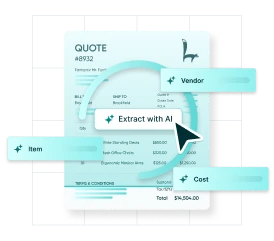
Preview AI Intake for Orders
Take the product tour to see how the new intake experience works.