

Maverick Spending Explained: Why It Persists and How Organizations Reduce Unmanaged Spend
Maverick spending is one of the most persistent challenges finance and procurement teams face, often surfacing during audits, invoice reviews, or budget reconciliations well after the original purchasing decision has been made. Although it’s commonly framed as a compliance issue, off-contract spend is more accurately explained by how purchasing decisions are distributed and executed as organizations scale.
As teams grow, buying activity spreads across more functions, systems, and timelines. Decisions increasingly happen close to the work, under pressure to keep projects moving. When purchasing workflows and data don’t surface enough context early spend drifts outside approved paths, even in organizations with mature policies and procurement programs.
This is why maverick spending persists alongside broader spend management initiatives. The issue stems from a mismatch between how purchasing decisions are made day to day and how oversight is applied.
This article explains what maverick spending is, why it continues to occur, and how organizations can prevent it as they scale.
What is maverick spending?
Maverick spending refers to purchases made outside established purchasing workflows, negotiated supplier agreements, or approved approval structures. This can include buying from non-preferred vendors, bypassing purchase orders, renewing contracts without review, or paying invoices that were never formally approved.
In practice, these purchases often appear reasonable in isolation. A team needs a tool quickly. A project requires a vendor that hasn’t been onboarded yet. A renewal is processed before anyone realizes it overlaps with an existing contract. Each decision makes sense at the moment it’s made.
The problem isn’t the individual decision, it’s how those decisions accumulate without shared visibility or coordination.
Why off-contract spend persists even when policies and tools exist
Most organizations dealing with unmanaged purchasing already have policies, approval thresholds, and procurement systems in place. Yet off-system spend continues to surface.
The issue is timing. Policies often live in static documents, while supplier agreements and budget data sit outside the request workflow. The context required to evaluate a purchase, including existing commitments, available budget, and vendor overlap, is fragmented across systems. This leaves decision-makers without a complete view at the moment a choice is made.
As a result, purchasing decisions move forward without the visibility required to control them. By the time finance or procurement reconstructs what happened, the decision is already finalized and the spend recorded. This is the same breakdown that makes it difficult to control company spending without slowing growth in distributed, fast-moving organizations.
The limits of traditional spend controls at scale
Organizations typically respond to unmanaged purchasing by expanding catalogs, tightening approval thresholds, reinforcing policy training, or increasing audit activity. These approaches can work in smaller or highly centralized environments where purchasing behavior is consistent and easy to oversee.
As organizations grow, their effectiveness declines. Catalogs lose relevance when they no longer reflect how teams actually buy. Additional approval layers slow urgent work without improving the quality of the underlying decision. Policy reminders increase awareness but do not provide the missing context required to evaluate tradeoffs. Audits surface problems only after the financial impact has already occurred.
Over time, teams adapt by finding faster ways to keep work moving. If procurement processes introduce friction without improving outcomes, workarounds become the practical option. Unmanaged spend increases not because controls are missing, but because they no longer align with how decisions are made across a growing organization.
Processing spend isn’t the same as controlling it
Spend control improves when systems support decisions before commitment. When teams can see existing contracts, current budget capacity, pending requests, and historical spending patterns while evaluating a purchase, they are able to assess impact early and choose the approved path without added friction.
This is where spend insights become essential. Insight shifts technology from a processing layer to a decision layer. Instead of correcting outcomes after the fact, organizations guide behavior upstream by making context available when it actually influences choices.
In that model, controls hold because decisions are informed, not because compliance is enforced after money has already moved.
Is unmanaged spend an indicator of spend maturity?
More organizations now view unmanaged purchasing as a signal of process maturity. Elevated levels of off-system spend typically point to gaps in intake structure, budget visibility, and decision alignment. These gaps become much clearer when organizations step back and assess how purchasing decisions actually move through the business, such as by mapping themselves against a procurement maturity assessment.
In fast-growing or decentralized environments, unmanaged spend often rises as decision-making spreads across teams and tools. When requests enter through inconsistent paths and visibility is fragmented, purchasing behavior diverges even if policies and approval rules are clearly defined.
As organizations mature, unmanaged spend declines because decisions are supported by shared context and integrated workflows. Budget awareness, existing commitments, and priority tradeoffs surface earlier in the process, making the approved path the most practical path for teams to follow.
Seen this way, off-contract spend highlights where decision infrastructure needs to evolve as the organization scales.
How organizations reduce rogue spend at scale
Organizations that consistently reduce unmanaged purchasing do not rely on tighter enforcement or additional reviews. They focus on how purchasing decisions enter the organization, how context is surfaced during evaluation, and where oversight is applied.
These operating changes drive the broader benefits of spend management, including improved budget control, fewer exceptions, and faster execution without added friction.
Three operating practices make the biggest difference.
Standardize purchase intake at the source
All purchase requests enter through a single, structured intake that captures the same core information every time: what is being purchased, why it is needed, who owns the budget, and when the spend is required.
This intake-first approach is the foundation of an effective intake-to-pay process, where spend control begins at the moment a request is created rather than after approvals or invoices appear.
By standardizing how requests enter the organization, decisions start with clear intent, consistent detail, and shared expectations. This reduces rework, limits downstream correction, and ensures approvals focus on tradeoffs instead of reconstructing context.
Surface spend context during decision-making
Decision-makers evaluate requests with visibility into current budget availability, existing commitments, pending requests, and relevant historical spend.
When this context is available before approval, teams can assess impact and tradeoffs in real time and proceed without escalation. This is where the practical benefits of spend management emerge, because control comes from informed decisions rather than after-the-fact enforcement.
Apply oversight based on signals, not volume
Finance and procurement focus oversight on patterns that indicate change, such as recurring exceptions, vendor cost increases, approval delays, or category-level drift.
Guardrails are adjusted when signals appear, while routine decisions continue without interruption. Oversight remains targeted and effective without slowing execution.
When these practices are in place, approved workflows become the easiest path to follow. Spend stays aligned as the organization scales because decisions are supported at the right moment, not reviewed after the fact.
Teams researching modern spend management often reference a spend management software buyer’s guide to understand which capabilities support this operating model.
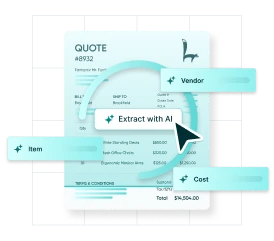
Preview AI Intake for Orders
Take the product tour to see how the new intake experience works.