

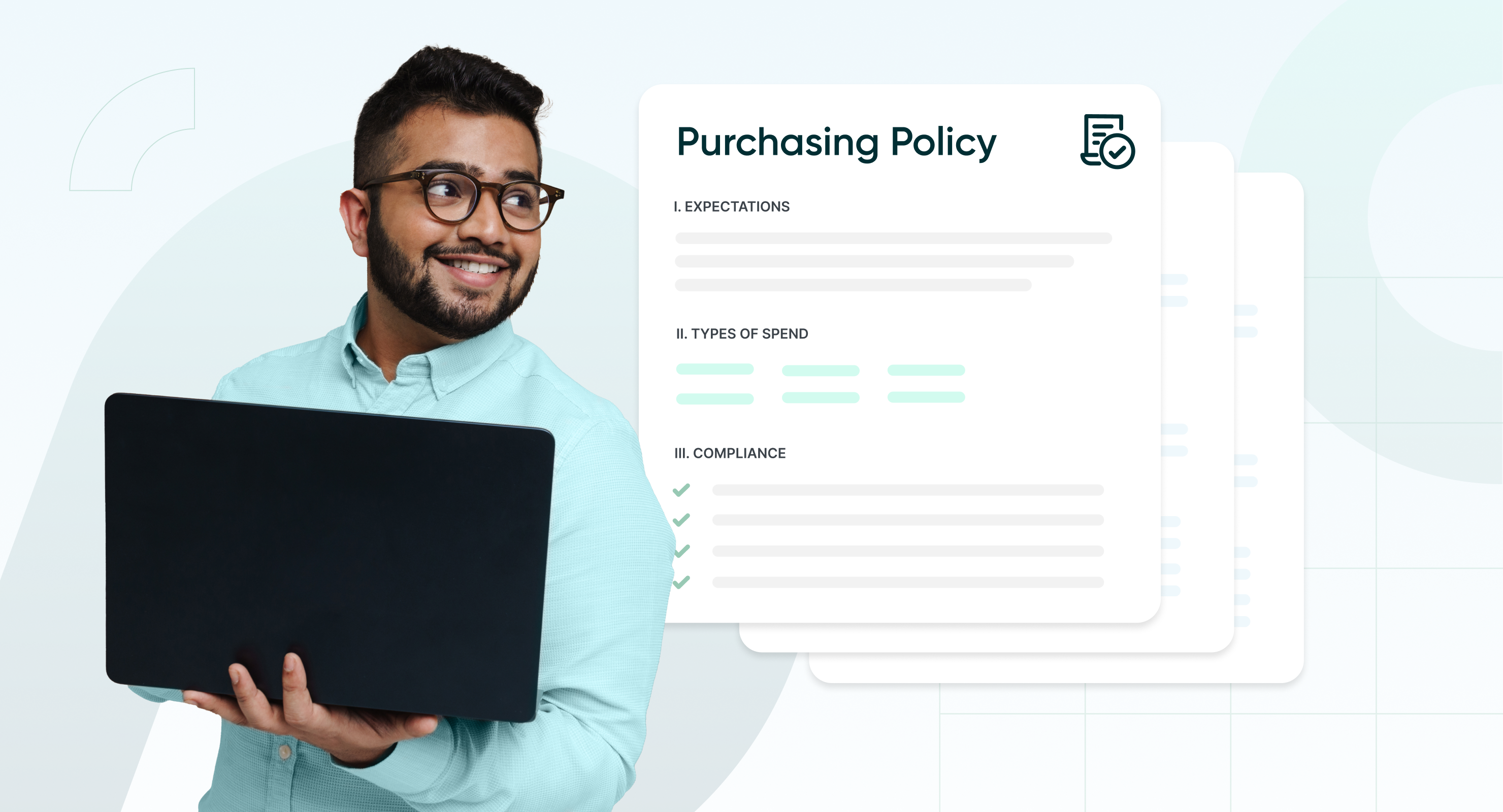
Nonprofit Purchasing Policy: 4 Considerations to Make
When you’re working to enhance communities and improve the quality of life for the people you serve, every dollar matters in the nonprofit space. Not only is every dollar important, but it also needs to be tracked diligently. Because nonprofit organizations in the United States spend funds raised publicly, they’re closely monitored and heavily regulated. Being compliant involves adhering to stringent purchasing guidelines, including strict vendor selection and clear-cut payment terms.
This level of accountability should come as no surprise. Nonprofits play a vital role in our communities, and it’s their responsibility to ensure that spending practices support their mission and contribute to the public good. Clear documentation and consistent processes are essential parts of responsible spending and broader nonprofit procurement operations.
A strong purchasing policy supports long-term sustainability and keeps your organization transparent to the public and your stakeholders.
In this blog, we outline the four key considerations you need to make when writing a nonprofit purchasing policy so you can create a clear, concise, and practical rulebook that minimizes the risk of non-compliance and reduces rogue spending.
Nonprofit procurement benchmarks and key challenges
Procurement across the nonprofit sector is under pressure. Budgets are tightening, reporting requirements are growing more complex, and teams are expected to move faster with fewer resources. For organizations managing multiple grants, programs, and funders, these pressures compound quickly — and small process issues can become major gaps in compliance or visibility.
Recent nonprofit procurement benchmark data shows:
- 6.45 hours — median requisition-to-PO cycle time
- 64.68 hours — average AP processing time
- 47.64% — percent of spend through catalogs (meaning nearly half of spend is still manual)
- $12,069 — average spend per vendor, indicating fragmented supplier networks
These numbers highlight why a clear purchasing policy is essential: it creates consistency, speeds up approvals, and prevents waste.
Together, these numbers reveal a system stretched thin. Slow approvals, manual processes, and decentralized purchasing make it harder to control spend — and harder for teams to stay compliant. A clear, well-documented purchasing policy helps establish consistency, reduce delays, and minimize waste.
To understand how your organization compares, our nonprofit procurement benchmark snapshot offers helpful context. Sector-wide issues—such as fragmented purchasing, slow cycle times, and heavy AP workloads—are explored further in our nonprofit procurement insights article.
For non-profits, operational pressure is only half the story. It is important to know that procurement standards themselves shift over time — especially federal purchasing thresholds. Because these limits change through ongoing rulemaking, nonprofits must keep their purchasing policies up to date to avoid compliance gaps.
Understanding the five procurement methods under uniform guidance
Uniform Guidance, as outlined by the U.S. Office of Management and Budget (OMB), remains the standard for regulatory compliance in the nonprofit space. Under Uniform Guidance, spend management rules apply to all federal awards and contracts that use government capital to obtain goods and services supporting a nonprofit’s mission.
These regulations evolve year over year, and understanding them is essential for responsible purchasing.
Here are the five basic procurement methods:
Micro-purchase: Purchases that do not exceed the micro-purchase threshold (generally $10,000) and do not require competitive quotes. For construction-related purchases subject to Davis-Bacon, the threshold is $2,000.
Simplified acquisition: Purchases above the micro-purchase threshold but below the Simplified Acquisition Threshold ($250,000), where informal procurement methods may be used. Quotes must be obtained from an adequate number of qualified sources.
Sealed bids: Purchases over $250,000 requiring formal solicitation. A fixed-price contract is awarded to the lowest responsible bidder.
Competitive proposals: Used for purchases exceeding $250,000 when sealed bids aren’t appropriate. Evaluation is based on the most advantageous proposal.
Noncompetitive procurement: Also known as sole-source procurement, allowed only in specific cases (single-source availability, emergencies, agency approval, or inadequate competition).
With these procurement methods in mind, here are four ways to strengthen your nonprofit’s purchasing policy.
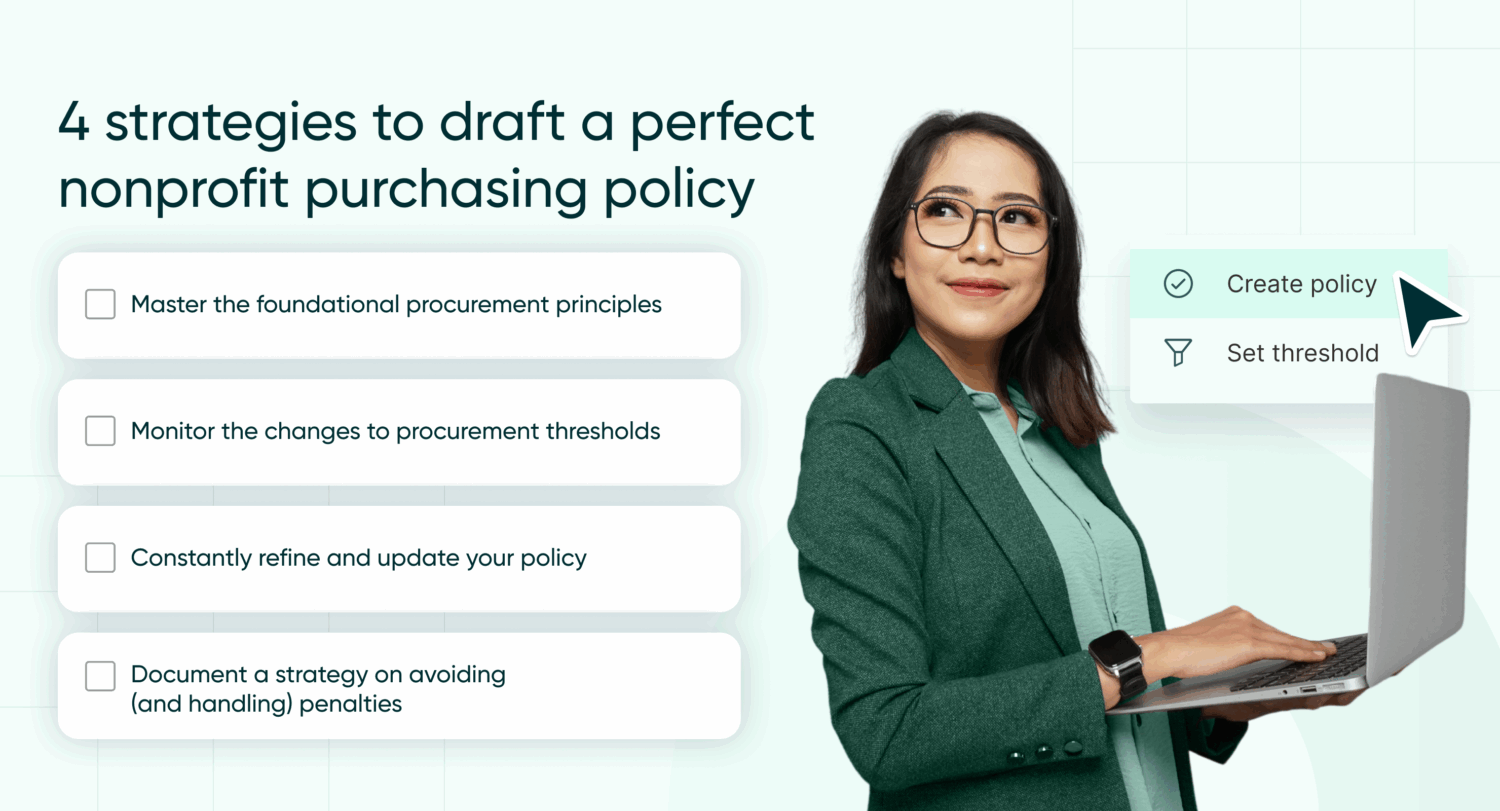
4 key steps to building a strong nonprofit purchasing policy
-
Master the foundational procurement principles
Every nonprofit should understand its internal culture of spending and how it intersects with state, local, and federal procurement requirements. This helps shape your policy, including how to govern teams handling grants or contracts and how to manage conflicts of interest.
Your nonprofit purchasing policy must include Uniform Guidance “musts,” such as:
- Maintaining written policies and procedures
- Ensuring that costs are reasonable and necessary
- Providing for full and open competition
- Establishing written conflict-of-interest standards
- Documenting cost and price analysis, and vendor selection
These expectations align with broader purchasing practices for nonprofit organizations
and help ensure spending decisions are well-supported and compliant. -
Monitor changes to procurement thresholds
Procurement thresholds don’t stay static — and your purchasing policy shouldn’t either. Uniform Guidance and the Federal Acquisition Regulation (FAR) are updated periodically to account for inflation, modernization, and shifts in federal oversight. Policies written years ago may no longer reflect current requirements.
For example, the federal government recently increased the micro-purchase threshold from $10,000 to $15,000 and raised the simplified acquisition threshold from $250,000 to $350,000, effective October 1, 2025. Updates like these significantly impact how nonprofits categorize purchases and determine when competitive quotes or formal bids are required.
Your purchasing policy should clearly outline:
- Where threshold updates are monitored
- Who is responsible for reviewing regulatory changes
- How often the policy is evaluated
- When changes must be formally adopted
Without a structured review process, policies can quickly become outdated — increasing the risk of non-compliance during audits.
-
Refine and update your policy
Knowing thresholds change is only half the responsibility; the other half is ensuring your internal purchasing policy changes with them. A nonprofit purchasing policy isn’t a static document—it’s a living framework that must evolve alongside new regulations, definitions, and audit expectations.
Even when federal thresholds increase, your organization remains bound by the most restrictive rule until your internal policy is formally updated. This means outdated dollar limits or competitive bidding requirements can slow down purchasing or create unnecessary administrative work long after regulations shift.
To stay compliant and effective, your policy should outline:
-
Who is responsible for tracking regulatory updates
-
How often the policy must be reviewed (at least annually)
-
What triggers an immediate update (e.g., threshold changes, revised procurement definitions, updated conflict-of-interest rules)
-
How updates are communicated across departments
Regular, structured policy reviews reduce compliance risk and support consistent, responsible purchasing aligned with your mission and funding obligations.
-
-
Document a process for addressing violations
Even with robust policies, violations can occur. Your purchasing policy should clearly outline:
- What constitutes a violation
- The consequences for non-compliance
- Who is responsible for managing violations
- How corrective actions are documented
- When escalation is required
Clear expectations build trust internally and support a conscious spend culture that encourages accountability and consistency.
Organizations that establish strong policies and visibility often see tangible efficiency improvements. For example, Community Youth Ministries strengthened control and visibility
across their purchasing process after formalizing purchasing rules and streamlining how teams spent awarded funds.
Why a clear purchasing policy matters
Regulatory compliance is complex, and without clear documentation, team members may struggle to understand how and when to purchase. Now is the time to strengthen procurement practices with consistent rules, clear thresholds, and transparent decision-making.
Clear policies are just the beginning — the next step is embedding those rules into daily purchasing workflows so staff can spend confidently and compliantly. Every dollar matters, and a well-structured purchasing policy ensures each one supports your mission.
Clear policies are just the beginning — the next step is embedding those rules into daily purchasing workflows so staff can spend confidently and compliantly. Strong purchasing habits also reduce downstream friction in nonprofit accounts payable processes by ensuring invoices arrive with the documentation and coding AP teams need to support audits and grant reporting.
To find out how Procurify can help your nonprofit spend smarter and remain compliant, book a demo today.

Preview AI Intake for Orders
Take the product tour to see how the new intake experience works.


