

Procure-to-Pay Process: Steps, Best Practices, and the Shift to Intake-to-Pay
Introduction into the procure-to-pay process
Procure-to-pay (P2P) is the process companies use to move a purchase from request to payment. It typically includes intake or request capture, approvals, purchase order creation, receiving, invoice matching, and supplier payment.
When P2P is working well, finance and procurement teams get clearer spend control, faster cycle times, and fewer invoice surprises. When it’s not, the problems show up quickly: off-policy purchases, approval bottlenecks, missing documentation, and time lost chasing exceptions.
Today, many organizations extend P2P into intake-to-pay, where requests and approvals are standardized before a purchase order is created. Even with that broader approach, the P2P steps remain essential—they’re what carry a purchase from approval to payment. A procure-to-pay platform can help by automating intake, approvals, purchase orders, and invoice workflows.
Below, we’ll break down the P2P process step by step, common pitfalls, and best practices to improve visibility, compliance, and efficiency.
Understanding the procure-to-pay cycle
The procure-to-pay (P2P) cycle is a core part of the broader procurement process. It connects purchasing activity directly to financial control, ensuring that every request, order, and invoice follows a structured path from need identification to supplier payment.
While procurement sits within the wider supply chain function, P2P focuses specifically on the operational and financial execution of purchasing decisions.
Core stages of the P2P cycle
Most organizations follow a consistent set of steps:
1. Need identification
The process begins when a department identifies a business need. This often starts with a purchase requisition, which formally documents what is required and why.
2. Supplier selection
Procurement evaluates suppliers based on pricing, reliability, compliance, and strategic fit. Strong supplier evaluation reduces downstream issues like invoice disputes or delivery delays.
3. Purchase order (PO) creation
Once approved, a formal purchase order (PO) is issued. The PO confirms quantities, pricing, delivery terms, and payment conditions, creating a contractual agreement between buyer and supplier.
4. Receipt of goods or services
When goods or services are delivered, the organization verifies that what was received matches what was ordered. Accurate receipt documentation is essential for downstream invoice validation.
5. Invoice processing and matching
The supplier submits an invoice, which is reviewed and matched against the PO and receipt—commonly known as three-way matching. Many organizations manage this step through structured invoice processing or accounts payable workflows to reduce errors and prevent overpayment.
6. Payment
After verification and approval, payment is issued according to agreed terms. Timely and accurate payment strengthens supplier relationships and improves financial reporting accuracy.
Why P2P Matters
Procure-to-pay matters because it’s the point where purchasing activity becomes financial accountability. It connects everything into a single workflow so that finance can actually measure and control spend.
Without a structured process, organizations struggle to answer basic questions:
- What have we committed to spend?
- What’s already been received but not invoiced?
- What liabilities are sitting in approval queues?
When those steps aren’t connected, the result isn’t just inefficiency — it’s reactive decision-making. This makes effective spend management significantly harder because finance is operating on incomplete or delayed information.
When the procure-to-pay process is disciplined, the opposite happens. In other words, strong P2P turns purchasing from a series of transactions into a controlled system that supports both operational efficiency and long-term spend management strategy.
Step-by-step breakdown of the procure-to-pay process
The procure-to-pay (P2P) process is the workflow businesses use to move a purchase from request to payment. Most organizations follow the same core steps:
Step 1. Identify the need
A team identifies a requirement for goods or services and confirms budget and policy alignment.
Step 2. Select the supplier
Procurement evaluates suppliers based on price, reliability, quality, and compliance requirements.
Step 3. Create the purchase order (PO)
A purchase order documents what’s being purchased, at what price, and under which delivery and payment terms.
Step 4. Receive goods or confirm services delivered
The organization verifies delivery and documents what was received.
Step 5. Process and verify the invoice
The invoice is reviewed and matched against what was ordered and received to prevent errors and overpayment.
Step 6. Approve and issue payment
Once verified and approved, payment is issued according to agreed terms.
That’s the process on paper. Next, we’ll look at what typically causes delays, exceptions, and rework inside real P2P workflows.
Common procure-to-pay pitfalls and how to avoid them
Here are the most common pitfalls and the simplest ways to prevent them:
Incomplete purchase requests
When purchase requests come in without a clear vendor, scope, budget owner, or required documentation, approvals stall and exceptions show up downstream.
How to avoid it:
- Require a minimum set of fields at intake (vendor, category, amount, budget owner, attachments)
- Reject “incomplete” requests instead of letting them enter approval
Approvals that rely on reminders
If approvals happen through email/Slack or depend on manual follow-ups, cycle time becomes unpredictable and month-end becomes a time-consuming challenge to close.
How to avoid it:
- Set routing rules by threshold/category and define an escalation path
- Assign an owner for stalled approvals (so it doesn’t become a shared blind spot)
Purchases made without a PO
“No PO” buying is one of the fastest ways to create invoice matching chaos and weaken audit trails.
How to avoid it:
- Define when a PO is required and enforce it for repeatable categories/vendors
- Review “non-PO” invoices monthly and fix the repeat sources (teams or suppliers)
Receiving that isn’t recorded
When receiving is skipped or inconsistent, finance can’t verify delivery, and invoice exceptions increase.
How to avoid it:
- Make receiving lightweight (one owner, one confirmation step)
- Define what “receipt” means for services so acceptance isn’t vague
Exceptions with no clear owner
If mismatches don’t have an accountable resolver, invoices age, vendors follow up, and teams chase context.
How to avoid it:
- Assign ownership by exception type (price variance, quantity variance, missing PO/receipt)
- Set a simple SLA and escalation rule when exceptions stall
If you prevent these five breakdowns, most P2P workflows become faster, cleaner, and easier to manage.
Best practices in the procure-to-pay process
Once the workflow is understood, the biggest gains come from building the system around it so the entire purchasing process stays consistent from start to finish as volume grows and teams change. This is often where procure-to-pay software helps, making best practices easier to enforce at scale.
Standardize intake with required fields (and enforce them)
Define what “complete” means at the request stage—vendor, category, amount, budget owner, and supporting documentation—so missing information can’t flow downstream.
Design approvals for speed and accountability
Use approval workflows with clear thresholds and routing rules, plus escalation paths when approvals stall. The goal is predictable cycle time, not approval theater.
Define exception ownership and resolution SLAs
Make it explicit who owns each type of mismatch (price variance, missing PO, partial receipt) and how quickly it must be resolved. Most P2P friction lives here.
Measure what drives rework
Track:
-
approval cycle time
-
% of invoices requiring exceptions
-
% of spend with a PO
-
receiving compliance
-
top recurring exception causes
The goal is to benchmark and track the right KPIs to pinpoint fixes that reduce workload.
Set supplier standards that prevent preventable problems
Document invoicing requirements (PO number usage, line-item detail, terms) and review performance with high-volume suppliers. Supplier alignment reduces exceptions dramatically.
Audit for process drift (before it becomes culture)
Over time, teams create workarounds. This is not the kind of spend culture organizations want. Regular checks for off-policy buying, skipped receiving, and after-the-fact POs prevent “exceptions” from becoming the norm.
These practices don’t replace the P2P steps—they make the process repeatable, auditable, and easier to scale.
Challenges and solutions in procure-to-pay
| Challenge | What it causes | Fix that sticks |
|---|---|---|
| Manual processing | Errors, delays, and rework across approvals and invoice handling | Standardize workflows and automate the steps that generate the most exceptions (matching, routing, reminders) |
| Inconsistent supplier practices | Invoice disputes, missing information, and repeated back-and-forth | Set clear invoicing standards (PO references, line-level detail, terms) and review performance with high-volume suppliers |
| Compliance drift | Off-policy spend, weak audit trails, and higher financial risk | Build policy rules into intake and approvals; audit periodically for skipped steps (no PO, missing receiving) |
| Slow approvals | Long cycle times, urgent escalations, and rushed month-end processing | Use threshold-based approval routing with escalation paths so requests don’t stall when approvers are unavailable |
| Low visibility into committed spend | Reactive decisions, budget surprises, and poor forecasting accuracy | Report on commitments and cycle time by stage (request, PO, receiving, invoice match) to spot bottlenecks early |
| Cross-team handoff gaps | Missed receiving, stalled invoices, and unclear ownership when something doesn’t match | Define owners per step and assign exception ownership (who resolves mismatches and how quickly) |
The future of the procure-to-pay process
Organizations don’t need more steps in their procure-to-pay process—they need it to be faster, more connected, and easier to control. That means building procurement intelligence into the workflow itself, across intake, approvals, matching, and visibility.
Automation and AI where exceptions happen most
Modern P2P platforms are focusing on automation to reduce friction caused by manual work. AI spend analysis tools are increasingly used to flag anomalies, detect policy drift, and surface patterns in spend before they become recurring problems.
More actionable analytics
Modern procure-to-pay software combines real-time budget tracking, exception monitoring, and supplier performance insights to surface risks earlier in the cycle.
Stronger supplier standards and collaboration
As P2P matures, supplier management becomes more structured. Clear invoicing requirements, consistent PO usage, and performance reviews reduce disputes and shorten cycle time.
Cloud-based and mobile workflows
Purchasing and approvals don’t happen at desks anymore. Cloud-based systems and mobile spend management workflows allow teams to approve, confirm receipt, and resolve exceptions in real time—without relying on email follow-ups or manual handoffs.
Compliance and sustainability built into the workflow
Rather than auditing policy after the fact, leading organizations embed compliance rules, approval thresholds, and sustainability requirements directly into the intake and approval process to ensure controls happen upstream.
By staying attuned to these trends, organizations can not only enhance their current P2P processes but also strategically position themselves for future challenges and opportunities.
The rise of intake-to-pay
Intake-to-pay is gaining momentum because the beginning of the purchasing cycle has changed. More spend now falls into services, SaaS, renewals, and project-based purchases—areas where approvals depend on context like scope, terms, and stakeholders, not just a price and a quantity.
That shift pulls more people into the decision early. A single request may require alignment with finance, procurement, IT, security, or legal before it’s ready to move forward. And as more teams gain purchasing autonomy through cards and departmental budgets, organizations can’t rely on policy documents alone—controls have to show up directly in the workflow, with the right thresholds, requirements, and approval paths applied consistently.
The challenge is that many procurement systems were designed for procurement users, not everyday requesters. Intake-to-pay fills that gap by standardizing how requests enter the process, guiding people to provide the right information upfront, and routing work to the right stakeholders before spend is committed.
Procure-to-Pay vs. Intake-to-Pay
| Dimension | Procure-to-Pay (P2P) | Intake-to-Pay (I2P) |
|---|---|---|
| Where it starts | Typically begins at requisition or purchase order creation | Begins at the initial request, before a purchase order exists |
| Primary focus | Executing and paying for purchases accurately | Structuring and approving requests before commitment |
| Visibility timing | After spend is committed | Before spend is committed |
| Risk control | Catches mismatches during invoice processing | Prevents issues at the request and approval stage |
| User experience | System-driven once procurement is involved | Guided intake for all requesters from the start |
| Primary goal | Accurate processing, documentation, and payment | Early alignment, compliance, and spend discipline |
In short: Intake-to-pay does not replace procure-to-pay—it extends it upstream. While P2P ensures purchases are processed and paid accurately, intake-to-pay improves what happens before commitment, capturing structured requests, enforcing policy earlier, and reducing downstream exceptions.
Real-world impact: What optimized P2P looks like in practice
For PSC Group, the payoff from improving procure-to-pay wasn’t a nicer workflow—it was getting procurement out of reactive cleanup mode. Once the process was standardized end-to-end (from PO creation through payment), fewer issues had to be chased downstream: fewer invoice mismatches, fewer manual follow-ups, and fewer delays tied to missing documentation.
That operational discipline translated into time back for the team:
“When I talk to the procurement team about how much time they are getting back, they estimate that they have about 20 to 30% more time to perform other tasks.”—Alex Costa, Vice President of IT, PSC Group
That’s the impact of a well-run P2P process: more capacity for higher-value work. Take the product tour to see how a connected P2P workflow works in practice
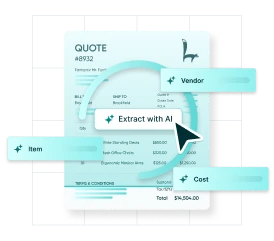
Preview AI Intake for Orders
Take the product tour to see how the new intake experience works.