
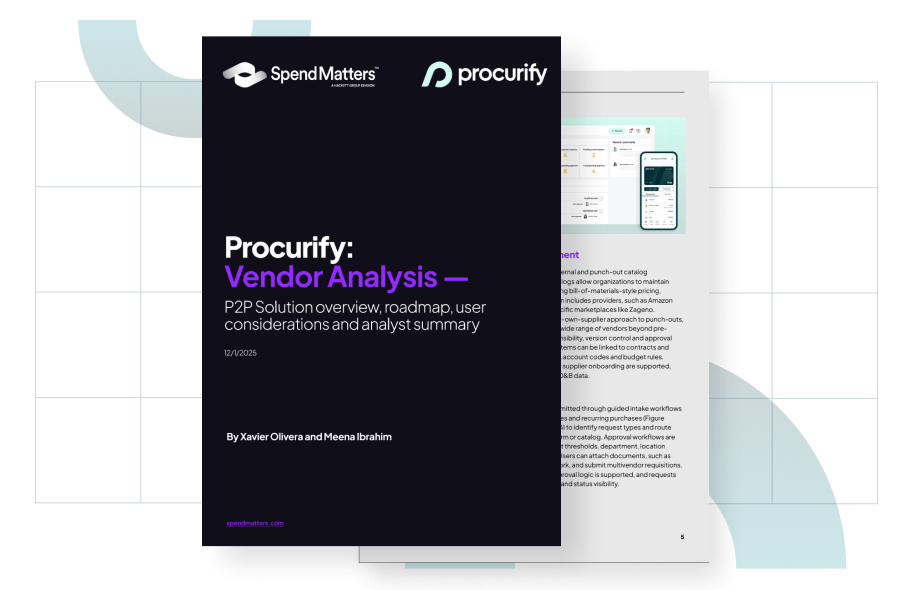
Inside the Spend Matters Evaluation of Procurify: Overview & Key Points
The Spend Matters analysis of Procurify is part of a broader analyst review of mid-market procure-to-pay (P2P) and intake-to-pay solutions. This article explains what the evaluation covers, how Spend Matters structures its vendor assessments, and what appears in the Procurify-specific portion of the report.
Key definitions
Spend Matters: An independent research and advisory firm that publishes procurement and finance technology evaluations, along with other research formats such as analyst-led sessions on mid-market trends.
Vendor Analysis: A standardized analyst review covering workflows, usability, integrations, automation, and product direction.
Procure-to-pay (P2P): A workflow category spanning purchasing, approvals, invoicing, and payment steps.
Intake-to-pay (I2P): A broader category that includes request intake, purchasing workflows, invoice handling, and payment execution in a unified process.
AP Automation: Technology that supports invoice capture, matching, approvals, and payment preparation, often with OCR or AI-assisted processing.
Spend Visibility: The ability to track organizational spending across categories, vendors, departments, and time periods through reporting and analytics.
Mid-market evaluations: Analyst assessments aimed at organizations that have operational complexity but limited IT resources compared to enterprise environments.
What spend matters evaluates
Spend Matters produces independent research on procurement and finance technology. Its vendor evaluations are designed to help organizations understand how different platforms approach purchasing workflows, AP processes, integrations, automation, and long-term product direction.
Each assessment follows a consistent framework so readers can interpret vendors on equal footing. Evaluations typically look at how a platform handles intake, purchasing steps, invoice processing, approval routing, data visibility, and integration with financial systems.
How P2P and Intake-to-Pay platforms are assessed
When reviewing P2P and intake-to-pay systems, analysts examine:
- The scope of workflows handled (intake, purchasing, invoicing, payments)
- How intuitive the system is for everyday users
- How approvals and routing logic work across teams
- How the platform integrates with financial systems
- The maturity of automation and exception-handling features
- Where the product is investing over time, and how that aligns with category direction
These criteria apply to all vendors included in the full multi-vendor report.
What’s driving the shift toward modern P2P platforms
Many mid-market organizations are reassessing their purchasing and AP processes as manual workflows, disconnected tools, and legacy systems create delays and reduce visibility. Analysts have noted a broader movement toward unified platforms that connect request intake, purchasing steps, invoice workflows, and payments within one structure.
The growing role of automation and AI is also influencing this shift. Teams increasingly expect systems to reduce manual entry, streamline approvals, improve audit readiness, and offer real-time visibility into budgets and spending. Evaluations like the Spend Matters analysis provide useful context for these trends by showing how different platforms address these evolving needs and how vendor roadmaps align with the direction of the intake-to-pay category.
Why Procurify appears in the report
Procurify is included because it fits the mid-market systems profile that Spend Matters evaluates: cloud-based platforms that support purchasing, AP automation, and spend visibility for organizations with distributed operations and common ERP integrations. The full Spend Matters Vendor Analysis includes multiple vendors; however, this page primarily focuses only on the Procurify portion.
What the Procurify section covers
The Procurify excerpt outlines how analysts describe the platform’s approach to the procure-to-pay process, invoice processing, approvals, payments, and spend visibility. It reflects their observations on deployment expectations, usability, and automation, as referenced in the evaluation. The section also includes the high-level roadmap themes, including developments in intake, AI-supported workflows, and spend analysis.
Although comparative material appears in the full report, this downloadable analysis includes only content specific to Procurify.
Why buyers rely on analyst evaluations
Many teams turn to analyst evaluations because choosing a new P2P or intake-to-pay system is high-stakes and often unfamiliar. These decisions affect purchasing, AP, finance, and operations, so organizations need a neutral reference point to reduce uncertainty and create shared understanding among multiple stakeholders. Analyst reports offer that structure by defining the workflow areas that matter, the capabilities expected in modern platforms, and the terminology teams can use to communicate internally.
Reports like the Spend Matters Vendor Analysis also help buyers compare systems more objectively. Product websites and demos can vary widely in depth and emphasis, but analyst evaluations use consistent criteria and a common lens across vendors. This makes it easier for teams to understand how a platform approaches mid-market challenges, how the user experience is designed, and how the roadmap aligns with where the category is heading.
For many organizations, these insights make early evaluation more efficient and more defensible. They help narrow down which vendors merit deeper review, serve as a credible source for internal discussions or business cases, and provide context that teams may not uncover through demos alone. The result is a more structured, confident, and informed selection process.
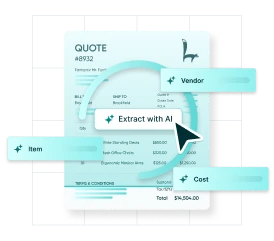
Preview AI Intake for Orders
Take the product tour to see how the new intake experience works.