
2026 Spend Management Software Buyer’s Guide: What to Know Before You Choose a Platform
Managing business spend has always mattered, and that’s unlikely to change. But the way organizations manage spend has changed dramatically. What was once a centralized, linear process now happens across dozens of tools and teams. Employees purchase from wherever they work. Departments choose their own vendors. Subscriptions renew quietly without oversight.
Meanwhile, email approvals, spreadsheets, disconnected ERPs, and older procurement modules were built for a very different operating model. They weren’t designed for a world where spending is continuous, decentralized, and increasingly data-driven.
The result is a widening gap: spending has become more distributed, but the systems managing that spend have not kept pace.
And while spend management (the discipline of controlling and optimizing spend across the business) is the goal, the real question for most teams is practical: what platform will actually support that goal in the way your organization buys today?
What is spend management software?
Spend management software centralizes purchasing, accounts payable, expenses, and card transactions in one place so organizations can control spending, enforce budgets, and gain real-time visibility into financial commitments.
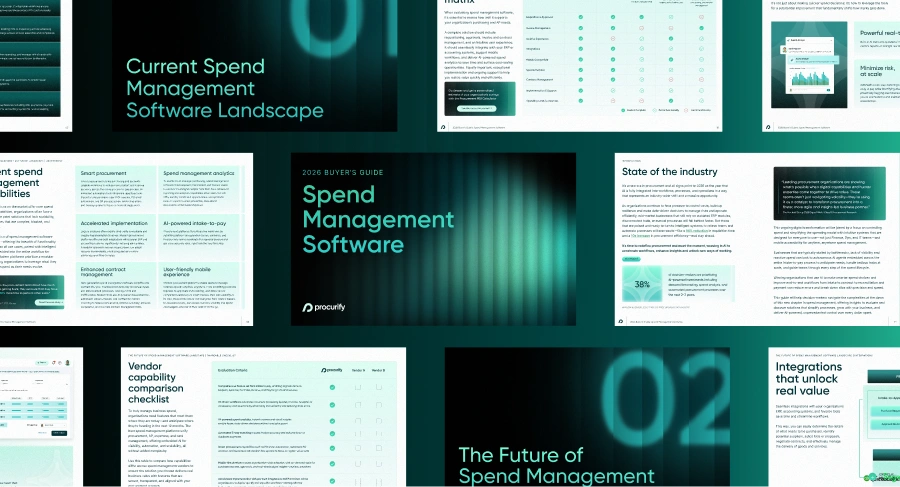
For teams comparing solutions, the 2026 Spend Management Software Buyer’s Guide offers a structured overview of key capabilities, evaluation criteria, and the differences between leading platforms.
This article breaks down the trends shaping the next generation of spend management software and highlights the factors every buyer should consider when evaluating solutions.
What’s driving the shift in modern spend management
Industry data clearly reveals the main catalysts behind these shifts. According to Amazon Business’ recent procurement research, many organizations have adopted digital tools to improve parts of their purchasing and AP workflows:
65% now use analytics to understand spend trends
56% automate at least one procurement task
55% rely on digital or online invoicing
42% are experimenting with AI to support purchasing decisions
These are meaningful improvements. But taken together, they reveal a clear pattern:
teams are digitizing individual steps, not the entire spend process. This helps explain why 47% of procurement leaders still say that disconnected systems are their biggest barrier to visibility and control. Even with better tools in place, the broader workflow remains fragmented.
And that fragmentation shows up in ways most teams feel every day:
- Budget impact becomes visible only after the fact
- Approvals slow down or vary across departments
- Vendor lists grow without coordination
- Subscriptions renew quietly in the background
- Invoices stack up in AP queues
- Spend decisions become reactive instead of planned
The reality is the supporting systems haven’t kept up with just how much spending management has changed. This is the main reason organizations struggle to control company spending effectively.
Modern spend management software platforms close that gap by unifying workflows, reducing manual effort, and giving finance, procurement, and operations real-time visibility into where money is going and why.
The problems spend management software is built to fix
When organizations talk about spend management software, they often think of automation or faster approvals. But the real value reaches deeper than that. Modern platforms solve the structural problems created by decentralized spending, inconsistent workflows, and limited visibility.
A unified spend management platform allows organizations to:
- Create consistent purchasing workflows
- Apply budgets before money is committed
- Reduce manual work in AP and procurement
- Bring all spend data into one place
- Strengthen compliance without manual policing
- Improve forecasting with real-time insight into commitments
At its core, spend management software helps finance teams move from reacting to spend to shaping it.
Key capabilities to prioritize when evaluating spend management software
Not all platforms approach spend the same way. The landscape shows wide variation in depth, usability, and intelligence. As organizations evaluate solutions, buyers consistently prioritize the following capabilities because they solve the issues teams face every day.
1. Workflow automation across purchasing and AP
Organizations need systems that remove manual steps, not just digitize them.
What to look for:
- Automated routing by dollar value, department, or category
- Three-way matching with minimal manual intervention
- Exception handling that prevents backlogs
- Configurable workflows that don’t require engineering
- True intake-to-pay visibility
What buyers often miss: Some platforms only automate approvals, not the full purchase approval workflow.
2. Real-time budget visibility
Finance teams want to see the impact of a decision before it’s approved. Strong platforms surface budget information at the point of action, reducing surprise spending and simplifying financial reviews, a core benefit of spend management for organizations modernizing financial processes.
What to look for:
- Budget insights embedded in requests and approvals
- Visibility into remaining budgets, not only historical spend
- Alerts for threshold breaches or unplanned spend
- Commitment tracking (POs + invoices + renewals)
What buyers often miss: Dashboards alone don’t always offer real-time budget tracking. You need context at the decision point.
3. Integrated expenses and card programs
Using separate tools for expenses, cards, and AP creates blind spots.
What to look for:
- Ability to tie card spend and expense reports to the same budgets
- Controls and limits that can be managed centrally
- Unified reporting showing both PO-based and non-PO spend
What buyers often miss: Platforms are only effective if everyone uses them. Given that 55% of organizations cite a lack of user adoption as their biggest challenge, a mobile- and user-friendly solution is key to driving engagement.
4. Vendor and supplier management
A central vendor record is essential for reducing duplication and risk.
What to look for:
- Prevention of duplicate vendor entries
- Ability to track performance, risk, and total supplier spend
- Tools for consolidating vendors or identifying sourcing opportunities
- Clean, searchable vendor history for audits
What buyers often miss: Some systems store vendor data but don’t make it actionable.
5. Embedded analytics and insights
Insights and spend analysis tools should support decisions.
What to look for:
- Insights presented at the moment of request or approval
- Anomaly detection (e.g., unusual pricing or spend patterns)
- Trend identification (e.g., recurring budget overages)
- Reporting that doesn’t require exporting to spreadsheets
What buyers often miss: Vendors use the word “analytics” loosely—ask where insights actually appear.
6. Usability across the entire organization
Adoption drives visibility. If users can’t follow the process, the process breaks.
What to look for:
- Simple mobile request and approval workflows
- Interfaces that frontline teams can use without training
- Tools that support both frequent and infrequent users
- Clear guidance for requesters (preferred vendors, catalogs, etc.)
What buyers often miss: If only the finance team likes (and uses) the software, spend won’t be captured cleanly.
The role of AI in spend management software
AI is a core part of modern spend management, but not all “AI-powered” platforms use it the same way. The biggest differences are in how AI supports everyday workflows.
Strong platforms embed AI into the moments where spend decisions happen, reducing manual work and improving accuracy. Others treat AI as a separate tool, surfacing insights only in dashboards or reports, where they do little to ease operational strain.
How to evaluate AI maturity
Buyers should focus on a few key questions:
1. Is AI embedded in the workflow?
Meaningful AI appears during intake, approvals, receiving, and invoice processing. If insights sit outside the workflow, they won’t materially reduce effort or risk.
2. Does the AI adapt to your organization?
Mature AI learns routing patterns, vendor trends, and typical price ranges. Static, rules-based automation does not improve—it simply repeats predefined logic.
3. Does AI reduce manual work?
AI can significantly reduce manual tasks by automating processes like invoice capture, matching, and approval workflows. Well-designed AI ensures high accuracy, reducing human error and saving time by automating repetitive tasks. For example, in accounts payable, AI-driven tools can instantly extract data from invoices and match it to purchase orders, eliminating manual data entry and reconciliation. Well-designed AI improves accuracy in areas like invoice capture and matching.
4. Does AI help prevent issues?
AI-powered spend tools can identify potential issues before they escalate. For example, AI can analyze spend patterns and flag discrepancies in real time, allowing teams to catch anomalies like duplicate payments, incorrect invoice amounts, or budget overruns early. Advanced AI spend software can also provide predictive insights, forecast budget impacts, and highlight financial risks that could lead to compliance violations or overspending.
Why this matters in 2026
Nearly every vendor now markets itself as “AI-powered,” but the depth and reliability of those capabilities vary widely. Understanding how AI actually behaves inside workflows is essential for long-term value and scalability.
What organizations gain by modernizing spend management workflows
The impact of modernization is tangible. When teams replace spreadsheets, email-driven approvals, and fragmented purchasing tools, operational improvements often appear quickly.
Common outcomes include:
Faster, more predictable approvals
Some organizations report approval cycles shrinking from 6–8 weeks to just half a day after standardizing workflows.
Earlier visibility into unnecessary or avoidable spend
Unified workflows help teams identify duplicate purchases or off-budget items sooner, sometimes uncovering tens of thousands in preventable spend.
Higher purchasing throughput
Automated intake and routing allow teams to focus more time on strategic work rather than administrative follow-up.
These improvements reflect what happens when fragmented processes are replaced with a more connected spend system.
This is also why choosing the right platform matters. The structure of the system and not just its features, determines how effectively teams can control costs, improve accuracy, and maintain financial visibility.
Before you choose your next spend management software platform
If you want a clear, structured evaluation framework including capability checklists, AI maturity criteria, and a comparison of leading vendors, the 2026 Spend Management Software Buyer’s Guide brings it all together in one place.
Spend Management Software FAQ
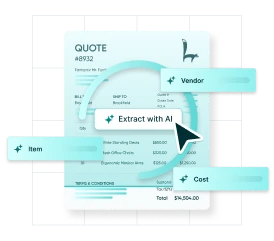
Preview AI Intake for Orders
Take the product tour to see how the new intake experience works.