

7 Key Benefits of Spend Management for Growing Organizations
As organizations grow, spending becomes harder to keep organized. More teams are buying tools, services, and supplies, and those purchases move through requests, approvals, purchase orders, receipts, and invoices before they are paid.
When those steps aren’t connected, finance teams often discover problems later—duplicate vendors, missing approvals, budget surprises, or invoices that don’t match what was ordered.
Spend management brings structure to how money moves through the business. It connects purchasing, approvals, and payments so organizations can see what is being requested, committed, and spent as decisions are made.
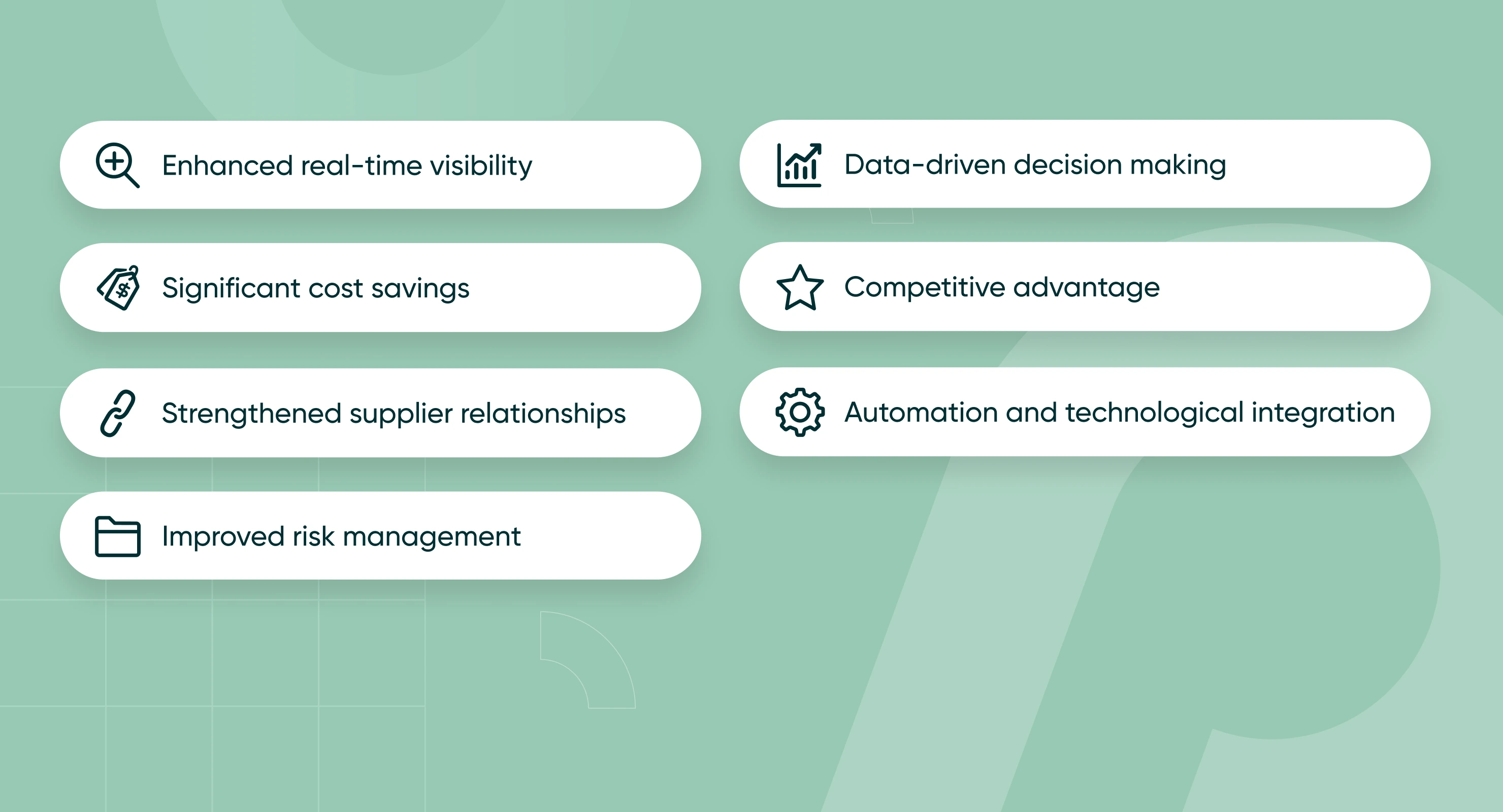
Below are seven key benefits of spend management for growing organizations. These benefits show up in spend visibility, budget control, automation, risk and compliance, better decisions, clear accountability, and sustained cost savings.
Reactive vs. Proactive Spend Control
The shift from reactive to proactive spend control is what separates modern spend management from legacy approaches.
| Area | Reactive spend control | Proactive spend control |
|---|---|---|
| When issues are detected | After spend is approved or paid | Before spend is committed |
| Visibility into spend | Fragmented across systems and reports | Centralized and visible in real time |
| Budget oversight | Variances discovered at month-end | Budgets evaluated at the point of request |
| Approvals | Manual, inconsistent, or email-based | Policy-driven and embedded in workflows |
| Policy enforcement | Enforced after violations occur | Enforced automatically before approval |
| Decision-making | Based on historical reports | Informed by live, in-context data |
| Risk exposure | Higher risk of non-compliance and surprises | Reduced risk through built-in controls |
| Finance team role | Policing spend after the fact | Guiding decisions upstream |
| Business impact | Slower responses, budget overruns | Faster decisions with greater control |
Bottom line: proactive spend control catches issues before money is committed—at the request and approval stage, not after payment.
1. Improved spend visibility across the organization
One of the most immediate benefits of spend management is real-time visibility into where company funds are going—and where they are about to be committed.
Without a structured approach, finance teams are often forced to reconstruct spend after the fact using spreadsheets, emails, and disconnected systems. By the time issues surface, purchases have already been approved or paid, leaving little opportunity to course-correct.
A strong spend management strategy improves upstream visibility by consolidating purchase requests, approvals, invoices, and payments into a single operating view. Spend can be categorized by department, project, or vendor and tracked against budgets as decisions are made, not weeks later during reporting cycles.
This level of visibility goes beyond basic cost control. It enables organizations to:
- Identify emerging risks before they impact budgets
- Understand demand patterns across teams and cost centers
- Make informed decisions based on real-time data instead of assumptions
When spend is visible at the point of decision, it becomes an operational control tool rather than a retrospective report.
2. Better budget control without slowing teams down
One of the most practical benefits is the ability to stay on budget without creating friction for teams.
When budgets live separately from purchasing workflows, overspending is often discovered too late. Requests are approved without context, leaving finance teams reconciling variances after funds have already been committed or paid.
A well-designed approach links budgets directly to intake and approval processes, enabling requests to be evaluated against available budget before moving forward. Departmental budgets, threshold-based approvals, and automated alerts make potential issues visible early, when adjustments are still possible.
This model doesn’t rely on manual enforcement or constant intervention. Instead, it establishes guardrails that allow teams to move quickly while maintaining financial oversight.
Organizations with strong budget controls can:
- Detect overspend risk before it becomes a budget issue
- Give department leaders real-time visibility into budget consumption
- Reduce last-minute escalations and rework at month- or quarter-end
By embedding budget awareness into everyday workflows, organizations can balance speed with discipline — keeping teams productive without sacrificing control.
3. Time savings through spend automation
One of the most tangible benefits is the time saved by replacing manual processes with automated procurement workflows.
In many organizations, procurement and accounts payable still rely on email chains, spreadsheets, and manual data entry. Teams spend hours chasing approvals, re-entering invoice details, and resolving mismatches between purchase orders and invoices. These inefficiencies slow down purchasing, increase error rates, and pull finance teams into constant cleanup.
Automation reduces this friction by standardizing and streamlining the most time-consuming steps across approvals, purchasing, and payments. Approval workflows route requests automatically based on role, category, or spend threshold. Invoices are matched against approved purchase orders and receipts without manual review. Data flows directly into accounting systems, eliminating duplicate entry and reconciliation work.
When automation is applied consistently across purchasing and payments, organizations benefit from faster cycle times and fewer interruptions. This is especially true when spend automation is part of a broader procure-to-pay process, where requests, approvals, purchasing, invoicing, and payments are connected end-to-end.
Organizations that automate spend processes are able to:
- Significantly reduce approval and invoice processing time, often compressing approval cycles from weeks to hours
- Eliminate repetitive administrative work tied to manual reviews, data entry, and follow-ups
- Free finance and procurement teams to focus on higher-value activities, such as planning, analysis, and vendor strategy
Over time, these time savings compound, improving operational efficiency and creating a smoother experience for everyone involved in purchasing and payment workflows.
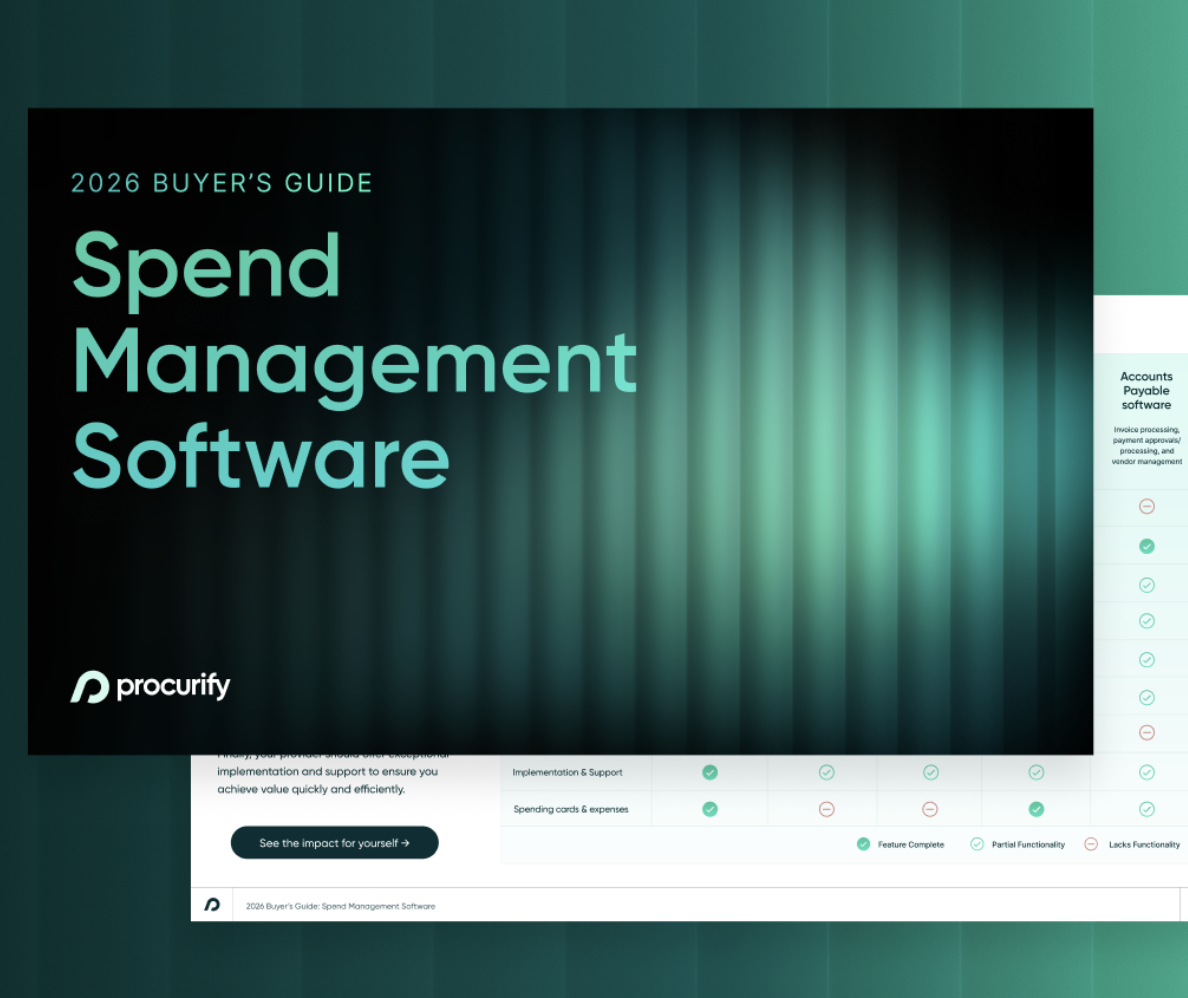
Planning your next step in spend management?
This Buyer’s Guide breaks down how to evaluate spend management software solutions.
4. Reduced financial risk and stronger compliance
One of the most critical benefits is reduced financial and compliance risk through consistent, enforceable controls.
When spending happens outside defined workflows, organizations face more than budget overruns. Missing approvals, off-contract purchases, and weak documentation increase the risk of audit findings, policy violations, and fraud. In these environments, finance teams often rely on after-the-fact reviews to identify issues—a common limitation of expense-only controls, where problems surface only after funds have been spent.
A comprehensive spend management strategy embeds governance directly into everyday workflows. Requests are evaluated against policy before approval, purchases are restricted to approved vendors and contracts, and every decision is recorded with a clear audit trail. Controls are applied automatically and consistently, reducing reliance on manual checks or retrospective cleanup.
This approach is especially effective when governance spans the full procure-to-pay lifecycle. This is everything from request and approval through purchasing, invoicing, and payment, ensuring controls don’t break down between systems or teams.
Organizations with strong spend governance are able to:
- Reduce off-policy and maverick spending
- Maintain clear audit trails for approvals and payments
- Strengthen internal controls without slowing operations
- Stay audit-ready without last-minute remediation
By shifting controls upstream and embedding them into how spending decisions are made, organizations proactively reduce risk.
5. More informed spend and purchasing decisions
In many organizations, spend data is fragmented across procurement tools, AP systems, and expense platforms. By the time that information is consolidated into reports, key decisions have already been made and budgets adjusted retroactively. This lag makes it difficult for finance and procurement teams to influence outcomes while there is still room to act.
A connected spend management approach addresses this by creating a single, continuously updated view of purchasing, invoices, and expenses. With spend data centralized, teams can analyze trends by vendor, category, department, or time period—and use those insights to guide decisions before funds are committed.
Increasingly, organizations are augmenting this foundation with AI-powered spend insights. Rather than relying on static reports or manual analysis, AI helps surface anomalies, highlight emerging risks, and explain changes in spend behavior as they happen.
Organizations that make decisions with real-time spend intelligence are better able to:
- Identify cost pressures and vendor trends earlier
- Adjust purchasing behavior before budgets are exceeded
- Improve forecasting accuracy and planning confidence
- Align procurement decisions with financial priorities
Clear ownership and accountability for spending
One of the most overlooked benefits of a structured spend approach is the clarity it brings to who owns spending decisions — and why those decisions are made.
In organizations without clear governance, purchasing can feel anonymous. Requests move through approvals without context, exceptions accumulate, and finance teams are left enforcing policy after the fact. Over time, this erodes accountability and creates friction between finance, procurement, and operating teams.
Clear structure changes that. Approval workflows tie every request, approval, and exception to a specific person, budget, and purpose. Decision paths are explicit, histories are documented, and spending behavior becomes traceable across departments. Accountability shifts upstream, to the moment decisions are made rather than downstream, when issues are discovered.
This level of ownership is difficult to achieve through expense management alone.
Organizations with strong spend accountability are able to:
- Assign clear responsibility for purchasing decisions
- Reduce finger-pointing during budget reviews and audits
- Empower department leaders to manage spend proactively
- Build trust between finance, procurement, and the broader business
When accountability is embedded directly in how spending flows through the organization, governance becomes collaborative rather than punitive, enabling teams to make responsible decisions at scale.
7. Sustainable cost savings and long-term efficiency gains
Cost savings are often the most visible outcome organizations expect — but the most durable savings come from discipline, not one-time cuts.
When spending is governed consistently, inefficiencies that quietly compound over time become visible. Redundant vendors, off-contract purchases, approval delays, and manual rework all introduce friction and cost. Addressing these issues systematically leads to savings that persist quarter after quarter, rather than disappearing after a single budget cycle.
As purchasing behavior becomes more predictable and spend data more reliable, efficiency gains accelerate. Teams spend less time correcting errors, renegotiating ad hoc purchases, or reacting to budget surprises. Instead, processes stabilize, cycle times shorten, and decision-making improves across finance, procurement, and operations.
At this stage, many organizations begin to formalize their approach, using benchmarks and maturity frameworks to pinpoint where inefficiencies persist and prioritize improvements that deliver lasting impact.
Organizations that achieve sustainable cost savings are able to:
- Reduce recurring waste through standardized purchasing and vendor consolidation
- Improve negotiating leverage by understanding spend patterns over time
- Lower operational costs by minimizing manual work, rework, and exception handling
- Scale processes without adding headcount or operational complexity
Resources like a spend management buyer’s guide can help teams evaluate capabilities that support long-term efficiency rather than short-term fixes.
Why spend management has become a strategic priority
The value of governing spend goes far beyond cost control. When organizations bring visibility, accountability, and discipline into how money flows through the business, they gain the confidence to move faster without losing oversight.
Instead of reacting to budget surprises or enforcing policy after the fact, teams can anticipate risks, make informed decisions, and scale operations intentionally. Finance shifts from policing transactions to advising the business, while procurement and operations align around shared goals.
For growing organizations, this approach provides the structure needed to manage complexity without introducing friction, turning spend into a lever for strategy rather than a source of uncertainty.

Preview AI Intake for Orders
Take the product tour to see how the new intake experience works.