


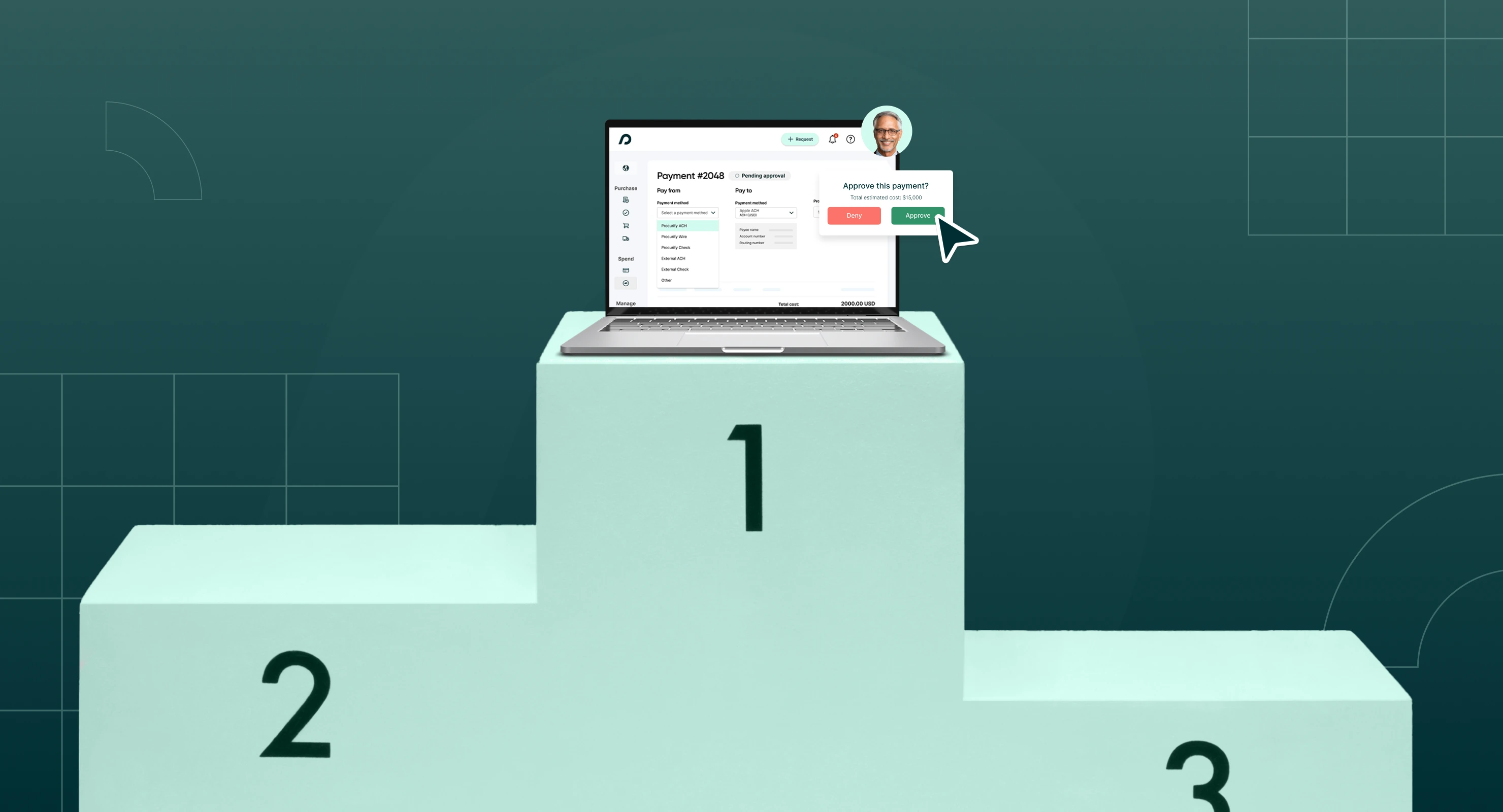
Best AP Automation Software in 2026: A Mid-Market Comparison
Most mid-market teams evaluating AP automation software think they’re solving one problem.
In reality, AP challenges often come from two connected parts of the same workflow: invoice execution and upstream spend control. Invoice execution is about processing invoices faster, reducing manual work, and managing payments. Upstream spend control is about making sure purchases are approved, visible, and tied to the right budget before an invoice arrives.
That distinction matters because the best AP automation software depends on where your process is breaking.
In this guide, we compare Procurify, Coupa, Tipalti, Precoro, Zip, and Float Financial based on where each platform creates the most value across the AP and purchasing lifecycle.
The short answer:
- Put Procurify on your shortlist if you want to control spend before it reaches AP, with structured approvals, PO-backed workflows, and real-time budget visibility built for mid-market teams
- Choose Tipalti if your biggest challenge is invoice throughput, supplier management, and global payments
- Consider Coupa if you need enterprise-wide spend governance across procurement and finance, and can support a more complex rollout
- Look at Precoro if you want a structured procure-to-pay workflow with simpler implementation
- Evaluate Zip if the problem starts with intake and fragmented approval workflows across teams
- Review Float Financial if your priority is proactive, card-led spend control rather than invoice-heavy AP
The key takeaway:
The “best” AP automation software depends on where your process is breaking, at the invoice, or before the invoice ever exists.
What is AP automation software?
AP automation software streamlines the invoice-to-payment process. It typically includes invoice capture, approval routing, three-way matching, supplier management, ERP sync, and payment execution.
For accounts payable teams, the goal is simple: reduce manual work, speed up invoice processing, improve accuracy, and create a clearer audit trail.
But AP automation alone does not always fix the root cause of AP friction. If invoices arrive without a PO, approvals happen over email, or requesters bypass purchasing policies, the issue starts earlier in the procure-to-pay workflow.
That is why buyers should separate two questions before building a shortlist:
- Do we need to process invoices and payments more efficiently?
- Or do we need stronger controls before invoices reach AP?
The answer determines which type of platform is likely to fit best.
Not all AP automation software solves the same problem
One reason AP software evaluations go sideways is that buyers compare different categories as if they are interchangeable.
They are not.
The distinctions: AP Automation vs Procure-to-pay vs Spend management
AP automation platforms focus on invoice processing, approval routing, supplier management, and payments. Procure-to-pay software connects more of the workflow, including requests, approvals, POs, invoice matching, and spend controls. Intake-to-procure tools standardize how spend requests enter the process, while top spend management software solutions focus on proactive controls like cards, budgets, limits, and policy enforcement.
The distinction matters because AP issues can have different root causes. Too many invoice exceptions may point to weak PO discipline. Slow approvals may point to email-based workflows. Messy invoices may point to poor request intake. Payment delays may point to supplier onboarding or global payment complexity.
Before you shortlist vendors, identify where your team spends the most time:
- Buried in invoice entry, approvals, and payments? You likely have an AP execution problem
- Receiving invoices without POs, approvals, or clear ownership? You likely have an upstream problem with your purchasing process.
- Managing requests through Slack, email, or informal channels? You likely have an intake problem
- Trying to prevent off-policy card or employee spend? You likely have a spend control problem
Most companies have more than one issue, but one usually creates the most friction.
The best AP automation software is not the one with the broadest category label. It is the one that fixes where your process actually breaks.
AP automation software comparison: at a glance
| Category | Procurify | Coupa | Tipalti | Precoro | Zip | Float Financial |
|---|---|---|---|---|---|---|
| Best for | Approval-heavy mid-market purchasing and AP | Enterprise-wide spend and AP governance | AP automation and supplier payments | Structured mid-market procure-to-pay | Intake and approval orchestration | Spend control and card-led workflows |
| Best when | You need requests, POs, invoices, budgets, and approvals in one workflow | You need scale, governance, and broad configuration | Your main pain is invoice-to-payment efficiency and payout complexity | You want purchasing and AP structure without enterprise-suite complexity | Purchasing requests are fragmented before AP gets involved | You want to prevent off-policy spend before it becomes AP cleanup |
| Main tradeoff | Best fit when AP problems are tied to purchasing control, not pure invoice throughput alone | Heavier implementation and admin burden | Less procurement-centric than full P2P platforms | May be outgrown by highly complex teams | May require other systems for deeper AP execution | Not the strongest standalone fit for invoice-heavy AP |
| AP vs. procurement depth | Strong procurement depth with AP controls | Broad P2P depth | Strong AP and payments focus | Balanced, structured P2P | Intake-to-procure focus with lighter AP depth | Spend control first, lighter AP fit |
| Mid-market fit | High | Medium to high | Medium to high | Medium to high | Medium | Medium |
| Validate in demo | Invoice volume, exception workflows, reporting, and approval usability | Rollout scope, internal resources, integration effort | PO workflow support, supplier onboarding, non-PO handling | Scalability, reporting, exception workflows | Invoice workflow depth, matching, downstream integrations | Invoice workflow depth, PO matching, AP operations fit |
Want to see how these platforms are rated by real users? Explore reviews on G2.
1. Procurify
Best for: Mid-market organizations that need procurement software and AP controls in one solution, especially where approvals, budgets, and PO-backed workflows matter.
Procurify is most compelling when accounts payable problems start upstream. If intake-to-order is inconsistent, approvals happen over email, and PO discipline is weak, invoice automation alone will not clean up the process. That is where Procurify stands out.
Its biggest strength is connecting purchasing and AP in one workflow. Teams can manage requests, approvals, purchase orders, invoices, budgets, expenses, payments, and vendor information in a centralized system, giving finance more visibility before spend turns into an invoice.
That makes Procurify a strong fit for companies looking to replace email approvals and spreadsheet-based purchasing with a more structured process, particularly mid-market teams that need control without the complexity of an enterprise suite.
Why teams choose it
Procurify is a strong fit for companies looking to replace email approvals and spreadsheet-based purchasing with a structured workflow that ties requests, POs, invoices, and budgets together. Recognized as one of the top procurement SaaS platforms for mid-market teams, particularly those that have found enterprise alternatives too heavy for their operating model.
- Structured approval routing for requests, POs, invoices, and payments
- PO-backed invoice control and three-way matching
- Real-time budget visibility and stronger spend oversight
- Centralized purchasing, AP, expenses, payments, and vendor records
- Mid-market fit without enterprise-suite complexity
What to validate before buying
- Performance with your real invoice and PO volume
- How exception workflows are handled and corrected
- Reporting depth for your finance and leadership needs
- Mobile approval experience if approvers often work away from desktop
- Budget configuration if your planning model is complex or non-standard
Not ideal if
- Your only priority is high-volume invoice processing and payment execution
- You do not need purchasing, PO, budget, or approval controls upstream
- You are looking for a lightweight standalone AP tool rather than a broader intake-to-pay workflow
2. Coupa
Best for: Larger mid-market and enterprise organizations that need broad spend management and AP control.
Coupa is the strongest option in this group when the requirement goes well beyond invoice automation. It is typically chosen by organizations that need procurement, AP, supplier management, approvals, and governance tied together across a more complex operating environment.
Its biggest strength is platform breadth. It is designed for companies that want durable process control, not just a faster invoice inbox. The trade-off is that breadth comes with more complexity than more approachable mid-market tools. Coupa is usually a heavier lift to implement and administer.
Why teams choose it
Organizations choose Coupa when they want enterprise-grade governance and are willing to invest in a broader rollout.
What to validate before buying
- Whether you need the full platform or just a narrower AP use case
- Internal admin and project resources
- Integration effort with your ERP and procurement stack
- Time to value relative to your current pain points
Not ideal if
- You want a quicker implementation
- Your main issue is AP efficiency rather than enterprise spend transformation
- Your team lacks the bandwidth for a more involved rollout
If you are evaluating whether Coupa fits your operating model, it’s worth comparing how mid-market alternatives perform in practice. See our breakdown of Coupa alternatives for mid-market companies.
3. Tipalti
Best for: AP teams prioritizing invoice automation, supplier management, and payments at scale.
Tipalti belongs near the top of the shortlist when the hard part of your process is in AP itself. If invoice volume is high, supplier payments are complex, or cross-border payouts create operational drag, its AP-first orientation is a better match than a procurement-led platform.
Tipalti is most relevant when your biggest questions are:
- How do we reduce AP workload?
- How do we speed invoice-to-payment?
- How do we manage supplier onboarding and payment operations more efficiently?
The caution is straightforward: Tipalti is not the strongest choice if your main challenge is upstream purchasing control. If missing POs, fragmented intake, and approval chaos are creating downstream invoice issues, you may still need stronger procurement workflow support than a payment-centric platform provides.
Why teams choose it
Tipalti is a strong fit when AP efficiency and payment execution are the real buying priorities.
What to validate before buying
- Support for PO-backed workflows if that matters in your environment
- Non-PO invoice routing and coding flexibility
- Supplier onboarding experience
- Global payment requirements and fee structure
Not ideal if
- Your biggest pain is procurement intake or requisition control
- You want requests, POs, and budget governance tightly managed in one front-end workflow
4. Precoro
Best for: Teams that want a structured way to manage purchasing and AP workflows without moving into a larger enterprise platform.
Precoro is a practical option for organizations moving away from spreadsheets, manual approvals, and disconnected purchasing processes. Its appeal is straightforward workflow management: helping teams bring more consistency to requests, approvals, purchase orders, and invoice handling in one system.
For mid-market teams with relatively standard procurement and AP processes, that structure can be effective. The key question is whether the platform can keep up as purchasing volume, reporting expectations, approval complexity, or AP exceptions increase when comparing Precoro and Procurify.
Why teams choose it
Precoro can work well for teams that want clearer purchasing structure, more consistent approvals, and a faster path away from manual workflows.
What to validate before buying
- Whether reporting provides enough visibility for finance and leadership
- How well approval routing supports your real-world policies
- How the system performs under your actual invoice and PO volume
- Whether it can support more complex procurement and AP workflows over time
Not ideal if
- You need a highly configurable enterprise spend management suite
- Your AP workflows involve frequent exceptions, complex entities, or advanced controls
- You want a broader intake-to-pay platform with deeper budget visibility and cross-functional spend control
5. Zip
Best for: Organizations that need stronger intake and approval orchestration before AP gets involved.
Zip is a strong fit when the buying process starts before procurement or AP has enough structure. Its value shows up when employee purchasing requests arrive through side channels, approvals are inconsistent, and teams lack a standard front door for spend requests.
If your biggest issue is request chaos and weak intake control, Zip can help address the root cause. If your biggest issue is invoice throughput, PO matching, or payment execution, you should validate whether Zip has enough AP depth for your workflow or whether it needs to sit alongside other finance systems.
Why teams choose it
Zip is attractive when companies need better cross-functional adoption and a more consistent request-and-approval process.
What to validate before buying
- Depth of invoice workflow support
- Matching and AP exception handling
- Integration with the rest of your finance stack
- Whether you will need another tool for broader AP execution
Not ideal if
- You want one system primarily for high-volume invoice processing
- Your main bottleneck is AP operations rather than request intake
6. Float
Best for: Finance teams focused on real-time spend control and card-based workflows.
Float is the most adjacent option in this comparison — spend-control-first rather than invoice-automation-first. For teams where a large share of operational spend can be managed proactively through card controls, Float has clear value. But for companies with high supplier invoice volumes and traditional AP workloads, it is usually not the primary answer.
Why teams choose it
Teams choose Float when they want better oversight of day-to-day spending and tighter budget guardrails.
What to validate before buying
- How much of your spend is actually card-appropriate
- Whether invoice workflows are deep enough for your AP team
- PO and approval support for supplier invoices
Not ideal if
- Your environment is heavily invoice-based
- You need strong PO matching and AP exception handling from a primary platform
Best AP automation software by use case
| Use case | Best fit | Why |
|---|---|---|
| Invoice-heavy AP automation at high volume | Tipalti | AP-first architecture built for invoice-to-payment efficiency and payout complexity |
| Enterprise-wide spend and AP control | Coupa | Breadth, governance, and configuration depth for complex operating environments |
| Approval-heavy mid-market purchasing and AP | Procurify | Structured approvals, PO-backed invoice control, and live budget visibility in one system |
| Simpler mid-market P2P rollout | Precoro | Structure without enterprise-suite overhead; faster time to value |
| Intake and approval orchestration | Zip | Standardizes the front door before invoices reach AP |
| Proactive spend control | Float | Card-based controls that prevent off-policy spend before it becomes AP cleanup |
How to choose among these tools
The fastest way to narrow your shortlist is to match the tool to the bottleneck.
- If most of your invoices are PO-backed and your main challenge is approvals, purchasing discipline, and budget control, start with Procurify or Precoro.
- If your issue is invoice processing and supplier payments at scale, start with Tipalti.
- If you need enterprise-level governance across procurement and AP, look to Coupa first.
- If your problem begins with messy request intake and fragmented approval routing, add Zip to the shortlist.
- If your finance team is trying to control spend before it becomes AP work, consider Float.
For any team comparing AP automation software, ask vendors to demonstrate more than the happy path. Have them walk through:
- A clean PO-backed invoice
- A non-PO invoice that needs coding and approval
- An exception invoice with missing information
- A reassigned approver or delegated approval chain
- A search for an old invoice, PO, and approval history
- A month-end reporting workflow
- A multi-entity scenario if you operate across entities or locations
That is where an accounts payable software comparison becomes useful — it shifts the focus from marketing claims to real operational fit.
What AP leaders should validate in a demo
At this stage, the most important buying questions are practical:
- How does the product perform under real transaction volume?
- How many clicks does common work take?
- How well does it handle exceptions, corrections, and reassignments?
- Can AP quickly find older invoices, POs, and approvals?
- Do requesters and budget owners actually adopt it?
- How flexible are approval rules by threshold, department, budget, and entity?
- What does implementation really require from your team?
These questions matter more than broad promises about automation. A little friction at high invoice volume gets expensive fast.
Frequently asked questions
What is the best AP automation software for mid-market companies?
For mid-market teams, the best fit depends on where the AP problem starts. Procurify is stronger when AP issues are tied to approvals, PO discipline, budget visibility, and upstream purchasing control. Precoro may fit teams that want a more straightforward procure-to-pay workflow. If the main priority is invoice processing and supplier payments at scale, Tipalti may be the better fit.
What is the best AP automation software for small businesses?
Precoro and Procurify are both worth evaluating for smaller or growing teams. Precoro’s lighter implementation and lower overhead tends to suit earlier-stage businesses. Procurify is a stronger fit once approval workflows and PO discipline become a priority.
What is the difference between AP automation software and procure-to-pay software?
AP automation focuses on invoice processing, approvals, suppliers, and payments. Procure-to-pay software starts earlier — covering requests, approvals, POs, invoice matching, and spend control. The distinction matters because some teams need tighter purchasing discipline upstream, while others need faster AP execution downstream.
Which AP automation platforms are best for global supplier payments?
Tipalti is the strongest fit in this list when global supplier payments, tax documentation, and payout complexity are major requirements.
Is Procurify a good fit for high-volume AP teams?
It can be, especially for mid-market organizations with approval-heavy, PO-backed workflows. Its strongest signals are around approval routing, centralization, budget visibility, and PO-to-invoice control. Buyers should validate performance, search usability, and workflow efficiency at their real transaction volume.
Final recommendation
If you are evaluating the best AP automation software in 2026, start with the bottleneck, not the category label.
Choose Tipalti if AP throughput and payments are the priority. Choose Coupa if you need broader enterprise spend governance. Choose Procurify if upstream purchasing controls, PO-backed invoice workflows, and budget visibility are driving your AP challenges. Choose Precoro for a simpler procure-to-pay rollout. Choose Zip for intake orchestration. Choose Float Financial for card-led spend control.
Shortlist two or three tools, then test each one against your real workflow: invoice mix, approval rules, PO requirements, reporting needs, and exception scenarios. That will tell you far more than a generic feature comparison.
Still deciding? Take a product tour to see how intake, approvals, POs, invoices, and payments connect in a real workflow.
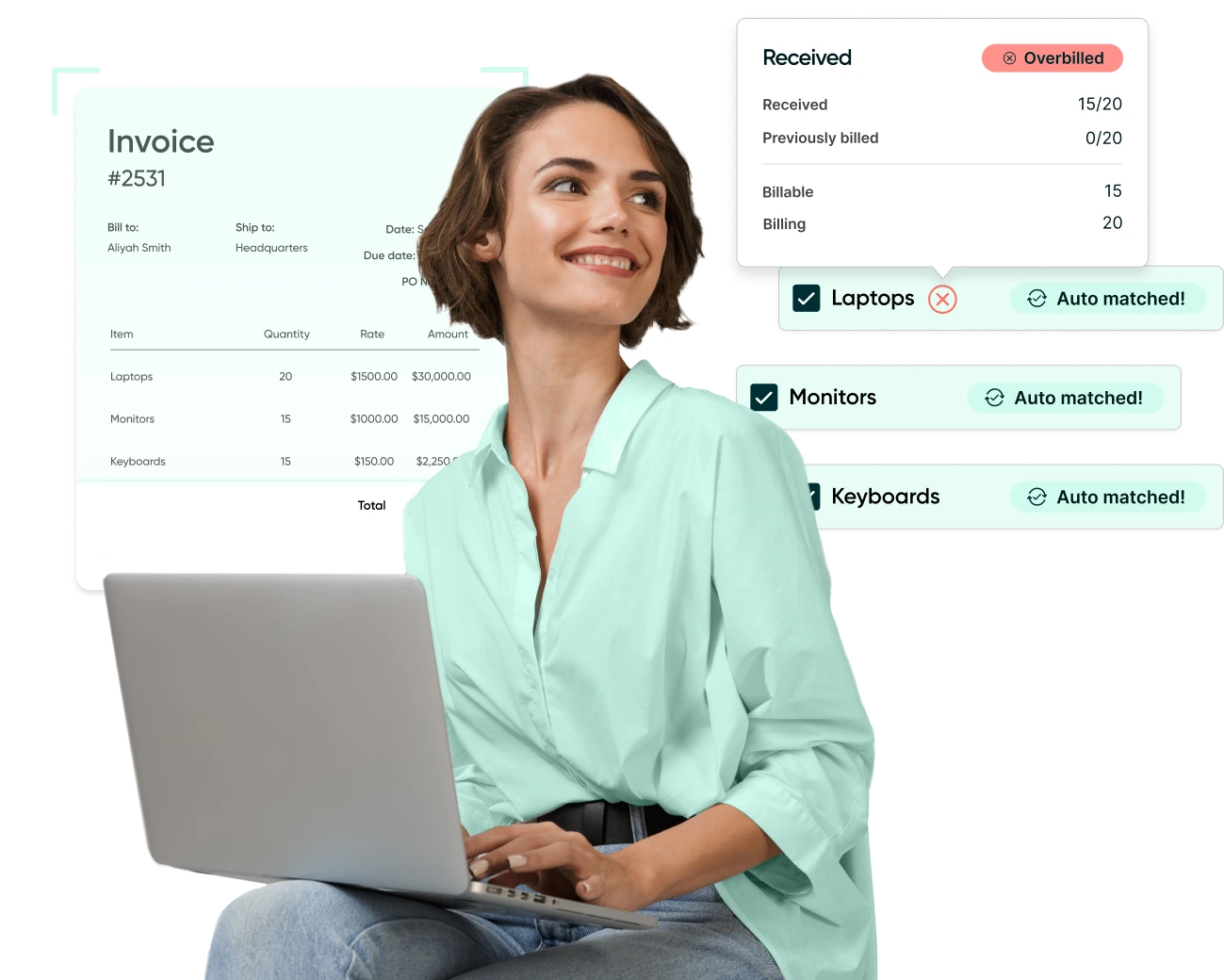
Webinar: Automate Your AP Processes with Procurify
Learn how AP automation enhances the efficiency, accuracy, and financial visibility of your accounts payable workflows.


