


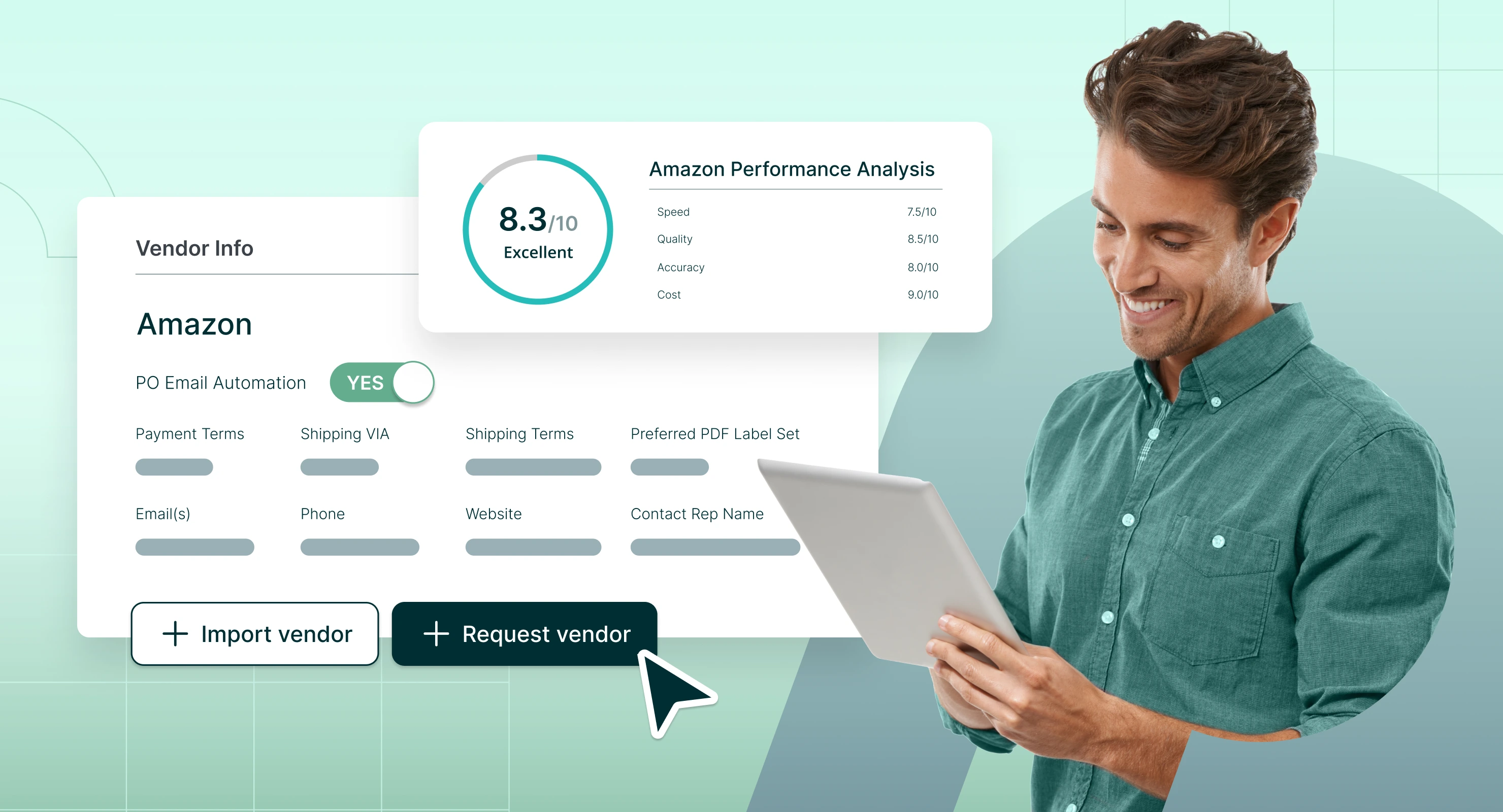
Best Vendor Management Software for Mid-Market Companies: 5 Tools Compared
For most mid-market companies, vendor management works best when it sits inside the procurement process.
Most 100–500 person companies need more than a supplier database. They need a practical way to manage vendor requests, approvals, purchase orders, invoices, contracts, and spend controls across departments. That makes procurement workflow especially important. When vendor management software is integrated with purchasing and finance processes, teams can see who requested a vendor, who approved it, what was purchased, what was paid, and how that spend fits within the wider budget.
For that reason, procurement software platforms are often a stronger fit than narrow vendor management tools.
This article compares the best vendor management software options, focusing on how each platform supports procurement workflows, approval controls, spend visibility, and finance team needs.
If you are building a shortlist, the direct answer is:
- Procurify is the strongest overall fit for mid-market teams that want procurement-led control, fast adoption, and better spend visibility across departments.
- Precoro is a solid option for companies that want straightforward procurement structure without enterprise complexity.
- Zip is best for organizations that need intake and approval orchestration across existing systems.
- Coupa is the enterprise-grade choice for larger, more complex procurement environments.
- Ramp is the best fit when vendor management is primarily a finance-led spend and payment control problem.
The right choice comes down to fit: your operating model, approval process, finance controls, and existing systems.
Why vendor management works best inside the procurement process
Many mid-market companies start evaluating vendor management software because the procurement process has become difficult to control across departments.
Vendor requests come through email or Slack. Approvals happen inconsistently. Purchase orders are missing. Invoices are disconnected from the original request. Vendor records live across spreadsheets, finance tools, and shared drives.
What teams usually need is a connected workflow that can:
- route vendor requests to the right approvers
- connect vendors to purchase requests and POs
- tie invoices and documents back to the original purchase
- track spend by vendor, department, and budget
- standardize repeat purchasing across teams
That is why procurement workflow matters.
A standalone vendor management system can make sense for specialized supplier oversight or external workforce programs. But for most growing businesses, vendor management creates more value when it is connected to purchasing, approvals, invoicing, and spend controls.
The operational cost of disconnected purchasing adds up quickly. Ardent Partners reports that teams processing invoices manually pay an average of $12.88 per invoice — before accounting for purchase approval delays, missing POs, duplicate vendor records, and time spent chasing documents across disconnected systems.
For mid-market organizations, the stronger long-term investment is usually a procurement platform that includes vendor management as part of the purchasing workflow.
| Vendor | Vendor onboarding | PO and approval integration | Supplier performance tracking | ERP/accounting integration | Pricing transparency |
|---|---|---|---|---|---|
| Procurify | Strong for centralized vendor setup and purchasing documentation | Strong; approval routing and purchasing control are core strengths | Moderate; stronger for operational visibility than formal scorecarding | Strong for common mid-market finance stacks | Custom pricing |
| Precoro | Good for straightforward vendor and purchasing record management | Strong for core requisition, approval, and PO workflows | Basic to moderate | Good with common accounting and ERP systems | More transparent than most platforms |
| Zip | Strong for vendor request intake and governance | Strong for intake and policy routing; downstream PO depth depends on environment | Limited relative to procurement suites | Good, especially in complex system environments | Custom pricing |
| Coupa | Very strong and broad | Very strong | Strong | Extensive enterprise integrations | Custom pricing |
| Ramp | Good when tied to spend controls and payment workflows | Moderate; strongest in AP, card, and spend approval use cases | Basic | Strong accounting integrations | Relatively transparent |
The table is useful for narrowing the field, but the best choice depends on where vendor management sits in your workflow.
1. Procurify
Best for: Mid-market organizations replacing spreadsheets, email approvals, paper POs, or disconnected purchasing processes.
For operations-led teams, Procurify is the most practical answer to the question behind this search: how do we bring vendor management, approvals, purchasing, and spend visibility into one system without taking on enterprise-level complexity?
The platform ties vendors directly to requests, purchase orders, and budget tracking using built-in approval software, so supplier records are not a separate admin task; they are part of every transaction. That integration is where most mid-market procurement platforms fall short. The difference shows up in results — Canal Barge cut requisition time by 96% and saved $2 million after implementing Procurify, recovering more than 34,000 hours previously spent on manual purchasing tasks.
In practice, it delivers configurable approval workflows with budget thresholds and department-level routing, centralized vendor records linked to POs, invoices, and supporting documentation, and real-time spend visibility by vendor, department, and budget. Repeat ordering is faster through vendor pre-population and internal catalogs, and setup is typically straightforward for teams without dedicated procurement staff.
It is also well-suited to distributed organizations that need one consistent process across teams, entities, or locations — and to companies dealing with informal approvals, inconsistent PO creation, or fragmented purchasing records spread across email and finance tools.
The mobile experience is weaker than desktop for some users, and buyers with nonstandard budgeting models, higher data volumes, or heavy PunchOut requirements should test those areas before committing. Those are real limitations in specific environments — they do not change the core fit for most mid-market procurement teams.
Procurify is the strongest option on this list for teams that want to bring purchasing discipline to a mid-market organization without sacrificing adoption.
2. Precoro
Best for: Mid-market teams that want straightforward procurement workflows, approvals, and PO standardization with less complexity.
Precoro is often the closest alternative for buyers who want purchasing structure without committing to a heavier enterprise suite. It is a practical shortlist option for teams that need a cleaner requisition-to-PO process, tighter approval control, and better recordkeeping than spreadsheets provide. Its appeal is appropriate scope — for lean operations teams that need core purchasing discipline rather than broader orchestration, Precoro does not overengineer the problem. For a direct feature comparison with Procurify, see how Procurify compares to Precoro.
It is most compelling when requirements are clear and relatively straightforward. Buyers should test how reporting holds up as process complexity grows, whether integrations match the systems they need long term, and whether the platform can keep pace if procurement becomes more layered across entities or teams — it may be less suited to environments where rapid complexity growth is expected.
If you want a more approachable procurement tool for core purchasing control without the enterprise overhead of Coupa or the orchestration-first model of Zip, Precoro is worth a close look.
3. Zip
Best for: Companies that need intake, policy enforcement, and workflow orchestration across multiple stakeholders and existing systems.
Zip is relevant because many companies use the phrase “vendor management” when their real problem is request chaos — vendor requests that start in Slack, email, or hallway conversations, with procurement involved too late and approvals inconsistent. Zip addresses that front-end problem well. Its strength is creating a structured front door for procurement and vendor-related requests in organizations that already have finance, ERP, AP, or procurement systems in place but need better governance over how requests enter and route through the business.
It is not usually the right fit if the main goal is to consolidate purchasing into one operational hub. Buyers should assess how much downstream PO execution lives in Zip versus other systems, whether adding an orchestration layer simplifies the stack or adds architectural complexity, and how intuitive the experience is for infrequent requesters. For some teams it is exactly the right answer. For others — especially those trying to replace fragmented purchasing with a single daily-use system — it can feel more governance-oriented than execution-oriented.
Choose Zip if you already have core systems in place and want better intake, stakeholder coordination, and policy routing rather than an all-in-one procurement platform.
4. Coupa
Best for: Larger or more complex organizations that need broad procurement, supplier, and governance depth.
Coupa is the enterprise benchmark on this list. It is often considered by mid-market buyers because it is well known and broad in scope, but it serves a different type of organization than the average 100–500 person company trying to replace spreadsheet-based purchasing. It brings substantial depth across procurement, approvals, invoicing, integrations, analytics, and supplier management — the closest fit when requirements lean toward formal governance and larger-scale process standardization. For a detailed breakdown of where the two platforms differ, see how Procurify compares to Coupa.
The tradeoff is weight. For many mid-market companies, Coupa can be more platform than they need. Buyers should evaluate implementation effort and timeline, internal admin requirements after go-live, end-user adoption outside a dedicated procurement team, and total cost relative to the complexity they genuinely need today. If the primary goal is to formalize everyday purchasing and gain spend visibility, Coupa is likely overbuilt.
Choose Coupa if your procurement environment is already complex, your governance needs are broad, and you are willing to take on a heavier rollout for deeper long-term capability.
5. Ramp
Best for: Finance-led teams that want vendor spend control tied to cards, AP automation, reimbursements, and payments.
Ramp belongs in this comparison because many buyers use “vendor management” to mean spend oversight — who are we paying, how often, through which channels, and under what controls. That is where Ramp is most relevant. It is strongest when finance is leading the project and the priority is controlling spend rather than building a procurement-heavy request-to-PO process: card controls, reimbursements, bill payments, AP workflows, and vendor spend visibility tied to finance operations.
It is not the right fit if you need structured procurement operations. Buyers should test requisition and PO workflow depth, how vendor onboarding works in practice, and whether approval logic matches procurement policy — not just spend policy. It is better understood as finance-led spend management with vendor visibility than as a full procurement-first platform.
Choose Ramp if your core problem is finance control over vendor spend and payments, not broader procurement process standardization.
Which vendor management software is right for your company?
If you want a fast answer before evaluating demos, use this as a starting point.
Choose Procurify if you are trying to replace spreadsheet purchasing, email approvals, and fragmented vendor records with a procurement-led system that everyday employees will actually use.
Choose Precoro if you want straightforward purchasing structure: requisitions, approvals, POs, without stepping into enterprise complexity.
Choose Zip if your main problem is intake and governance and you already have core systems in place that need better coordination.
Choose Coupa if your procurement environment is already complex, your governance needs are broad, and you have the internal capacity to support a heavier rollout.
Choose Ramp if finance owns the initiative and the core need is vendor spend visibility, payments, AP automation, and card control rather than PO-driven procurement.
How to evaluate vendor management software for a mid-market procurement workflow
A good demo should answer more than whether a feature exists. It should show how the tool fits your actual operating model. Focus on these questions:
- Do you need POs and approval control, or mainly spend control? This is the dividing line between procurement-first tools and finance-led platforms.
- Are you trying to consolidate systems or orchestrate around them? Some platforms replace fragmented tools. Others add a control layer on top.
- Who owns the process internally? Operations, procurement, and finance often define the problem differently. Your best-fit platform depends on where ownership sits.
- Which ERP or accounting systems must connect? QuickBooks and NetSuite compatibility matters, but so does the depth of sync across vendors, bills, POs, departments, and entities.
- How advanced does supplier oversight really need to be? Many teams think they need deep vendor performance management when the bigger gap is still approvals, record centralization, and spend visibility.
It is also worth asking each vendor to walk through one realistic workflow end to end: new vendor request, approval routing, purchase request, PO creation, invoice handoff, and retrieval of the vendor’s full purchase order history. That sequence will tell you more than a polished feature tour. For a broader look at how mid-market companies structure their supplier base, see our guide to supplier optimization.
FAQ
What is the best vendor management software for mid-market companies?
For most mid-market organizations, the best fit is a procurement platform with vendor management built into approvals, purchasing, and spend control — not a narrow standalone VMS. Procurify is the strongest overall fit for procurement-led teams, while Precoro, Zip, Coupa, and Ramp each make more sense for specific operating models.
What is the difference between a VMS and procurement software?
A VMS typically focuses on vendor-related administration or specialized supplier programs. Procurement software covers the broader buying process, including requests, approvals, POs, invoices, budgets, and supplier records. For most growing companies, procurement software is the more practical category.
Does vendor management software integrate with QuickBooks and NetSuite?
Most platforms in this category support QuickBooks and NetSuite, or both. The more important question is what actually syncs between systems. Ask specifically about vendor records, POs, bills, departments, budgets, and multi-entity support — not just whether an integration exists.
Is vendor management software the same as supplier management software?
The terms are often used interchangeably. Supplier management software can imply broader supplier lifecycle, compliance, or performance workflows. Many mid-market buyers searching those terms still end up needing procurement software that manages supplier records inside day-to-day purchasing.
Do I need a standalone vendor management system or a procurement platform with vendor management built in?
If your biggest pain points are approvals, purchasing control, invoice handoff, and spend visibility, a procurement platform is usually the better fit. A standalone system makes more sense when supplier oversight is separate from purchasing execution or requires highly specialized workflows.
What are the different types of vendor management systems?
There are four main types. Procurement platforms that manage the full purchasing workflow, including vendor onboarding, approvals, POs, invoices, and spend visibility, all in one system. This is the most practical category for most mid-market companies. Standalone VMS tools focus specifically on supplier records, compliance documentation, and performance tracking, but sit outside the purchasing process. Contingent workforce systems manage contractors and temporary staffing rather than goods and services procurement. AP-focused tools handle vendor payments, bill processing, and supplier onboarding for finance workflows, but typically lack PO and approval depth.
Final takeaway
The best vendor management software for a mid-market company depends less on brand recognition and more on where vendor management lives in your workflow. If you need procurement-led control with fast adoption, Procurify is the strongest place to start.
If your team needs vendor management built into purchasing, approvals, and budget control, take a guided tour of Procurify and compare it against your current approval flow, repeat ordering process, and finance integrations.
$30B+ in real spend data you won’t get anywhere else
Find out what it takes to move from reactive to AI-driven operations.


