


Spend Management vs Expense Management: Is There a Difference?
Spend management and expense management are often used interchangeably, but they serve different purposes within an organization’s financial operations. Understanding how they differ is important for teams deciding where to focus control, visibility, and process improvement.
Spend management takes a broader view of how a company plans, controls, and analyzes spending before money is committed. Expense management focuses more narrowly on how employee-initiated expenses are reported, approved, and reimbursed after they occur.
This article explains the difference between spend management and expense management, including how each works, where they apply, and when organizations need one, the other, or both. It is intended to clarify definitions and responsibilities rather than outline implementation tactics or software selection.
Understanding spend management
Spend management refers to how organizations plan, control, and analyze company spending before money is committed. It focuses on shaping purchasing decisions upstream rather than reviewing transactions after they occur.
Unlike expense management, which deals primarily with employee-submitted expenses, spend management covers a broader set of activities tied to procurement, supplier agreements, and budgeted purchasing across the business.
In practice, spend management typically includes:
- Procurement and purchasing workflows, which govern how goods and services are requested and approved
- Contract and supplier management, which ensures purchases align with negotiated terms
- Spend analysis, which provides visibility into commitments, trends, and budget impact before spending occurs
These areas exist largely outside traditional expense management, which focuses on processing and reimbursing costs after they have already been incurred.
For a deeper explanation of how spend management works across procurement, budgeting, and analysis, see What Is Spend Management?
Understanding expense management
Expense management focuses on processing and reimbursing employee-initiated expenses after they occur. These typically include travel and entertainment, office supplies, and other out-of-pocket costs incurred in the course of work.
Unlike spend management, which governs purchasing decisions before money is committed, expense management operates downstream. Its purpose is to ensure expenses are reported correctly, reviewed against policy, approved, and reimbursed in a timely manner.
Because expense management is inherently post-spend, it plays a different role in financial control. It helps organizations maintain policy compliance and administrative efficiency, but it does not influence most purchasing decisions at the point they are made.
For a deeper look at expense reporting workflows, policy enforcement, and reimbursement processes, see Understanding Expense Management: A Comprehensive Guide.
Key differences between spend management and expense management
While spend management and expense management both play critical roles in a company’s financial health, they differ in several fundamental ways. Understanding these differences is essential for businesses aiming to implement effective financial management strategies.
Strategic Focus vs. Transactional Focus
-
Spend Management is strategic in nature, focusing on the overall management of company spending through planning, procurement, and analysis. It aims at optimizing spend across the company before expenses occur, integrating with broader business strategies to drive growth and efficiency.
-
Expense Management, on the other hand, has a more transactional focus, dealing with the processing, payment, and auditing of expenses after they have been incurred by employees. Its primary goal is to control costs and ensure policy compliance.
Scope of Management
-
Spend Management covers a wide range of business spending, including direct and indirect expenses, capital expenditures, and services. It encompasses the entire spend lifecycle, from procurement to payment.
-
Expense Management specifically targets employee-initiated expenses, such as travel and expenses, office supplies, and other operational costs. Its scope is narrower, concentrating on the post-spending review and reimbursement process.
Tools and Technologies
-
Spend Management utilizes comprehensive tools that facilitate procurement, supplier management, contract management, and spend analysis, often integrating with enterprise resource planning (ERP) systems for a holistic view of company finances.
-
Expense Management relies on specialized software designed to streamline expense reporting, policy enforcement, purchase approval workflows, and reimbursements, focusing on user-friendly interfaces for employees and managers.
Impact on Business Strategy and Operations
-
Spend Management directly influences a company’s strategic direction, offering insights into spending patterns, supplier performance, and potential savings opportunities. It helps businesses make informed decisions that can lead to long-term financial health and competitive advantage.
-
Expense Management impacts operational efficiency by simplifying the expense reporting process, improving employee satisfaction through timely reimbursements, and maintaining budget control through policy compliance.
How spend management and expense management deliver value differently
Spend management and expense management support different outcomes, even though they both contribute to financial control.
Spend management helps organizations influence decisions before money is committed, supporting broader goals like budget control, supplier optimization, and strategic planning. Its value comes from visibility and alignment across procurement, budgeting, and approvals.
Expense management focuses on efficiency after spend occurs, helping teams process employee expenses quickly, enforce policy compliance, and reimburse employees accurately.
Both play important roles, but they operate at different points in the spending lifecycle. For a deeper look at how each creates value in practice, see the benefits of spend management and the benefits of expense management.
When to use spend management vs. expense management
While both spend and expense management are crucial for financial oversight, understanding when to emphasize one over the other can optimize your company’s financial strategies.
When spend management is the better fit
-
Comprehensive Financial Strategy Overhaul: When spending decisions need to be guided earlier, across procurement, budgeting, and approvals.
-
Procurement and Supplier Negotiations: If your business spends significantly on procurement or seeks to improve supplier relationships, spend management’s strategic approach can drive better value and efficiency.
-
Long-term Planning and Investment: When leadership needs forward-looking visibility into commitments and tradeoffs.
When expense management is the better fit
-
Streamlining Employee Expense Processes: When employee reimbursement and reporting workflows are the primary challenge.
-
Enhancing Policy Compliance and Control: When the focus is on enforcing rules after expenses are incurred.
-
Quick Wins for Operational Efficiency: When faster processing and employee experience improvements are the priority. For teams focused on expense processing performance, tracking the right T&E KPIs helps identify bottlenecks and compliance gaps.
Integrating Spend and Expense Management for Comprehensive Financial Oversight
In practice, many organizations use both spend and expense management together. Spend management governs decisions before money is committed, while expense management ensures employee-initiated spend is processed and reimbursed correctly after the fact. Used together, they provide coverage across the full spend lifecycle without forcing one system to do the job of the other.
Modern trends shaping spend and expense management
As businesses navigate a rapidly changing economic environment, staying abreast of trends in financial management can offer competitive advantages. Here are some of the key trends reshaping spend and expense management:
Automation and AI
Automation continues to reduce manual effort across procurement, expense reporting, and reconciliation. AI-driven procurement software helps standardize intake, flag exceptions earlier, and reduce processing delays across both spend and expense management.
More advanced analytics are also improving forecasting and scenario planning by identifying patterns in historical spend and surfacing risks before they show up in reports. This is especially valuable in spend management, where decisions are influenced before commitments are made.
Integrated financial systems
Spend and expense management tools are increasingly integrated with ERP, accounting, and budgeting systems to create a more connected financial view. This integration reduces data silos and ensures that approvals, payments, and reporting reflect the same source of truth.
For finance teams, tighter integration means less reconciliation work and more confidence that decisions align with current budgets and commitments.
Real-time visibility and analytics
Real-time data is becoming a baseline expectation rather than a differentiator. Teams want immediate visibility into spending activity so they can respond to changes as they happen, not weeks later during close.
In expense management, this improves compliance and speeds reimbursement. In spend management, it enables earlier intervention by making commitments, pending approvals, and budget impact visible while decisions are still flexible.
Greater focus on employee experience
Ease of use has become a critical factor in adoption. Tools that are intuitive, mobile-friendly, and embedded into existing workflows improve compliance because employees are more likely to follow approved processes when those processes are simple.
A better user experience benefits finance as well. Cleaner submissions, fewer exceptions, and more consistent data reduce downstream correction and manual review.
These trends not only signify the technological advancements in financial management but also reflect a broader shift towards more strategic, data-driven decision-making processes. Adapting to these trends can help businesses stay competitive, efficient, and financially healthy.
Choosing the right approach to spend and expense management
Spend management and expense management serve different roles, but they work best when they are understood together rather than treated as interchangeable. Spend management shapes decisions before money is committed, helping organizations align purchasing, budgets, and priorities at scale. Expense management focuses on controlling and processing employee-incurred costs after they occur, ensuring compliance and efficient reimbursement.
Organizations tend to rely more heavily on spend management when they need visibility and control across procurement, contracts, and discretionary spend, especially as teams grow and purchasing becomes more distributed. Expense management becomes critical when operational efficiency, policy enforcement, and employee experience around reimbursements are the priority.
The most effective finance teams do not choose one at the expense of the other. They design workflows where upstream spend decisions are informed and intentional, while downstream expense processes remain fast, accurate, and compliant. When this balance is in place, companies experience the broader benefits of spend management, including fewer exceptions, clearer accountability, and more predictable financial outcomes.
For teams evaluating how to support this model with technology, a spend management software buyer’s guide can help identify which capabilities are required to maintain decision-level control as the organization scales.
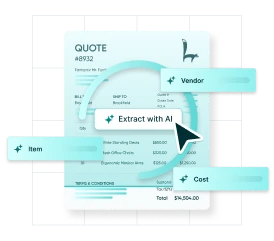
Preview AI Intake for Orders
Take the product tour to see how the new intake experience works.