



AI in Contract Management: What It Means for Purchasing Teams
For many organizations, AI contract management is one of the most effective ways to control spend, yet it often receives the least attention. Teams negotiate terms, secure pricing, agree on renewals, and set expectations with vendors, but once the contract is signed, the administrative work begins. This stage is rarely simple. It requires capturing a dense set of details, storing the agreement somewhere accessible, and making sure the right information flows into purchasing and accounts payable.
When everything goes well, this work is tedious but manageable. When it doesn’t, the impact spreads quickly.
This article breaks down why contract data is so difficult to manage, how errors creep into purchasing workflows, and how modern contract management software changes what’s possible.
Why contract data is so difficult to manage
A contract carries a dense set of information: dates, renewal terms, pricing structures, payment schedules, obligations, and legal language. Some span only a few pages while others run much longer, and even a small oversight can affect budgeting, purchasing, invoice matching, or compliance.
The challenge isn’t only the volume of information but the lack of standardization. Vendors use their own templates. Dates appear in different formats. Payment terms are worded inconsistently. Someone entering this information must interpret what each field means and translate it into structured data for internal systems.
Traditional tools, such as optical character recognition, can extract text but cannot understand the meaning behind it. They cannot distinguish between a start date and a renewal date, or interpret phrases such as “thirty days from the effective date.” They also cannot reliably match vendor names or terms to existing records. The most important decisions still rest with the person reviewing the document, which is where inconsistencies often begin.
What AI can do for contract management in purchasing
Recent advances in natural language understanding mean contract management no longer has to rely on manual reading and re-entry. This is part of a broader shift in how AI is being applied across procurement, and contracts are one of the clearest examples.
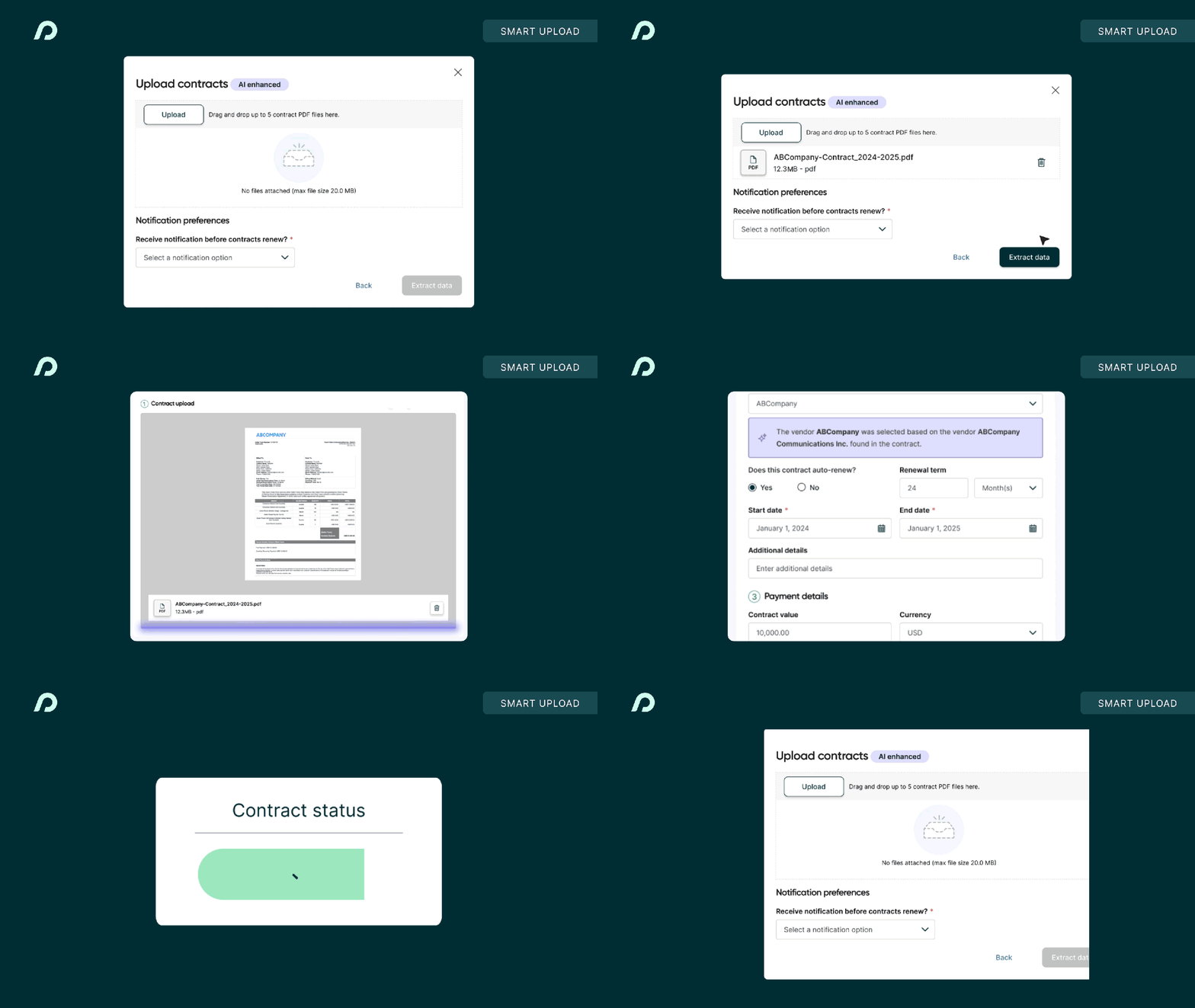
AI can now read contract documents much like a person would; it doesn’t just detect text; it interprets context, automatically extracting vendor names, currency, and payment terms straight from the PDF. It identifies which dates define the start or end of a term, understands renewal language such as “thirty days from the effective date,” and recognizes when different vendors use different wording to describe the same obligation. This same technology can batch-process multiple contracts at once rather than forcing a one-at-a-time upload, which matters when a team is managing more than a handful of agreements.
AI also connects what it reads to existing vendor records, matching suppliers mentioned in the contract to the correct profiles in the organization’s database. This ensures contract information ties directly to purchasing and spend control rather than living in a standalone file. One organization put this to the test directly:
“Once we had better visibility into our supplier contracts, we were able to review a long-standing agreement and identify a better option. Switching that one supplier saved us approximately £90K.” That’s what better contract visibility is worth in practice, not just cleaner data.
The result is a significant reduction in manual work. Instead of retyping dates, terms, amounts, and vendor details, users receive a draft with the essential information already populated. Review replaces transcription.
For teams managing dozens or hundreds of contracts, the impact compounds quickly. Work that once required several minutes of reading, interpreting, and manual entry can now be completed in a fraction of the time, with greater consistency across the organization. That consistency matters when evaluating how to choose contract management software: the strongest platforms don’t just store agreements, they help teams apply contract data reliably across purchasing, approvals, and spend management
What this means for purchasing spend control
A signed contract should do more than sit in a repository. Its pricing, renewal dates, payment terms, minimum commitments, service levels, and other obligations should influence what happens when someone actually tries to spend money.
That is where AI is making contract management more useful to purchasing teams. AI can extract key commercial terms from contracts and turn them into structured data that procurement systems can use. Instead of requiring someone to open a PDF and interpret the agreement each time, those terms can become part of the procure-to-pay process.
For example, purchasing teams can use contract data to:
- Check purchases against negotiated pricing. If a supplier is charging more than the contracted rate, the discrepancy can be identified before the purchase or invoice is approved.
- Spot off-contract spend. A new request can be checked against existing supplier agreements before another vendor or agreement is introduced.
- Track commitments against budgets. Minimum purchases, scheduled payments, and other contractual commitments can be reflected in future spend rather than appearing only after an invoice arrives.
- Act on renewals earlier. Renewal dates, notice periods, and termination windows can trigger action before an agreement automatically extends.
- Monitor supplier obligations. Rebates, service-level commitments, credits, and other negotiated benefits are easier to track when they are captured as data rather than buried in contract language.
This is an important distinction. AI does not create spend control simply by summarizing a contract faster. The greater opportunity comes from connecting what was negotiated to what the organization subsequently buys, approves, receives, and pays for.
That connection can also reduce contract value leakage. World Commerce & Contracting’s 2026 research estimates that procurement organizations lose an average of 11% of contract value after signature due to issues such as missed savings, unmanaged obligations, and unauthorized changes.
As procurement becomes more agentic, contract data becomes even more important. An AI agent evaluating a purchase needs to know whether an active agreement exists, what price was negotiated, what the organization has already committed to, and whether the purchase falls within the agreed scope. Structured contract data gives those systems the context to make better purchasing decisions rather than simply automating the next step.
Next steps for better contract management
Better contract management doesn’t have to start with a major overhaul. Start by getting the basics right: keep contracts in one place, make key dates and obligations easy to find, assign clear owners, and make sure purchasing teams can see the terms they’re expected to follow.
From there, look at where the process still breaks down. Are renewals being missed? Are teams buying outside negotiated agreements? Are contract commitments visible when budgets are reviewed? Those gaps are often a better guide to what you need from a tool than a long feature checklist.
If you’re evaluating a new system, look for contract management software that connects contract information to the broader purchasing process, rather than simply storing documents in another repository.
$30B+ in real spend data you won’t get anywhere else
Find out what it takes to move from reactive to AI-driven operations.


