


Mid-Market Procurement Is Evolving. Here’s What Buyers Want Now
For years, procurement software followed a familiar pattern.
Finance teams were stuck with two choices: shoulder the cost and complexity of an enterprise platform that wasn’t built for them, or rely on tools that were easy to adopt but struggled to support growing operational needs.
That tradeoff is becoming increasingly outdated.
Today’s mid-market organizations are operating in a much more complex environment. Finance and procurement leaders are being asked to improve visibility, strengthen spend controls, accelerate approvals, and support growth—all while maintaining lean teams and limited resources.
And buyer expectations are changing in-step.
The conversation now isn’t just about simply digitizing procurement processes. It’s about creating a system that provides real-time visibility into spending, connects purchasing decisions to financial outcomes, and drives accountability across the organization; increasingly powered by AI that understands the context, not just records it.
This shift is reshaping the procurement and Procure-to-Pay (P2P) software categories—and creating a new definition of leadership in the mid-market.
The mid-market procurement category evolution
Much of the procurement technology market was historically built around functionality first.
But today’s mid-market organizations are looking for more than features. They need solutions that can drive adoption across the business, create spend accountability, and deliver measurable value, quickly.
The expectations placed on procurement teams have also grown significantly. Procurement leaders are expected to provide strategic insights into organizational spending, help finance teams improve forecasting and budget management, and create the controls necessary to support sustainable growth.
Underneath all of this is a more fundamental shift: procurement is moving through a generational technology change.
The first wave digitized purchase orders. The second automated approval workflows. The third—already underway—is agentic. AI no longer just routes a request; it understands the request, codes it to the right GL account, validates it against policy, and escalates only the rare exceptions to a human. Intake-to-pay is becoming a system that thinks, not just a system that records.
That changes what “leadership” in the category means. The platforms gaining traction in the mid-market aren’t the ones treating AI as a bolt-on to existing work queues. They’re the ones embedding intelligence across the entire intake-to-pay process—where organizational history, vendor data, and approval patterns give agents the context to act reliably.
As procurement becomes more strategic, software evaluation criteria are evolving in tandem. Organizations increasingly prioritize critical metrics like real-time spend visibility, user adoption and ease of use, AI-assisted automation, faster time-to-value, finance and procurement alignment, and scalable controls that support growth.
The vendors coming out on top aren’t simply helping organizations process purchases more efficiently: they’re enabling them to make better choices.
“Mid-market finance teams aren’t buying workflow tools anymore,” said Chad Gaydos, CEO of Procurify. “They want an intelligent platform that runs intake-to-pay end-to-end, that they can roll out in weeks instead of quarters, and that doesn’t make their controller and their CFO learn two different systems. They’re buying systems that do the work. That’s the standard we’re building Procurify to set.”
The new standard for procurement success
As buyer expectations evolve, several priorities have emerged as defining characteristics of successful procurement programs.
Visibility before spend happens
Organizations need real-time insight into spending before commitments are made—not weeks later during month-end reviews.
Modern procurement platforms help leaders proactively manage budgets, approvals, and purchasing decisions before spend occurs.
“We can now use project codes and approval groups the way we actually work in the field. Everyone can see what’s coming through, instead of finding out after.” —Benjamin Steffes-Lai, IT Support Technician at GroundTruth Exploration
Adoption across the organization
The most sophisticated procurement process only works if employees actually use it.
Ease of use, intuitive workflows, and stakeholder adoption have become critical factors in procurement software selection.
“What I like best about Procurify is its easy-to-use interface. It is very intuitive and makes tracking expenses by department or vendor a breeze. The platform is simple to navigate, which saves time and makes the overall expense management process much smoother.”
—Serena B., Director Of Accounting
Intelligence built into the workflow
AI has moved from a future-state talking point to a present-day buying reality.
Mid-market buyers are now evaluating procurement platforms on how meaningfully AI shows up in the day-to-day: agents that draft and code purchase requests, validate them against policy, surface budget risk before approvals, and shorten the path from intake to payment. The expectation is that AI removes manual effort across the workflow—not that it adds another screen for the team to manage.
Procurify’s AI Intake for Orders is one example: upload a vendor quote PDF and the system extracts line items, prices, vendor details, and account codes into a clean draft purchase request—eliminating the manual retyping behind the nearly half of order requests that start as file attachments. Spend Insights is another: finance teams can ask plain-language questions of their live spend data (“which vendors drove the spike this quarter?”) and get answers with the underlying orders attached, instead of waiting on a month-end report.
Platforms that embed AI into core procurement and AP processes are also delivering a second, less obvious benefit: faster, more reliable onboarding. AI-assisted configuration is collapsing implementation timelines from quarters to weeks, which has become its own competitive differentiator in mid-market buying cycles.
Procurement and finance alignment
Procurement and finance teams are increasingly working toward shared goals around budgeting, forecasting, cash management, and spend governance.
Organizations are looking for platforms that create a single source of truth across purchasing and financial operations.
Faster time-to-value
Procurement leaders are under pressure to demonstrate impact quickly.
The ability to implement efficiently, drive adoption rapidly, and produce measurable outcomes has become a significant differentiator in the market and when the process can be completed in a number of weeks, it sets the stage for early proof and seamless company-wide rollout.
Scalable controls without complexity
Growing organizations need stronger controls and accountability without creating unnecessary administrative burden.
The most effective procurement programs strike a balance between governance and agility, empowering teams to move quickly while maintaining visibility and control.
Why Procurify leads the mid-market procure-to-pay category
G2’s recent Summer 2026 reports provide a clear signal about where the market is heading and what customers really think.

Based on customer reviews and real-world outcomes, Procurify was recognized as the #1 Procure-to-Pay Software for Mid-Market organizations, ahead of established providers like Ramp, Zip, Coupa, and Precoro, and earning 43 badges across Procurement, AP Automation, and Strategic Sourcing. We were also featured in 88 Grid and Momentum Reports.
Of course, buyers don’t evaluate vendors on badge counts. They evaluate them on the four indexes that map to a real buying decision: Usability, Implementation, Results, and Relationships. Procurify ranks at or near the top on all four.
The all-segment Implementation Index for Procure-to-Pay in particular jumped from #3 to #1 this quarter—a direct signal that AI-assisted onboarding and configuration are getting customers to value faster than the alternatives. For mid-market finance teams under pressure to prove ROI quickly, that gap matters.
These recognitions reflect more than product satisfaction and highlight what procurement and finance leaders increasingly value: visibility, adoption, accountability, and measurable business impact.
As the category evolves, those priorities are becoming the new standard for procurement success.
Looking ahead
The future of procurement belongs to organizations that can connect purchasing decisions to broader business outcomes.
That means creating visibility before spend occurs, building accountability across teams, putting AI to work across the intake-to-pay lifecycle, and giving finance and procurement leaders the tools they need to make smarter decisions.
The bar just moved. The vendors already building above it will define the next phase of procurement—and the ones who aren’t have less time than they think.
As buyer expectations continue to evolve, we’re excited to help define what’s next for mid-market procurement and we’re grateful to the customers whose feedback, partnership, and success continue to shape both our platform and the future of the category.
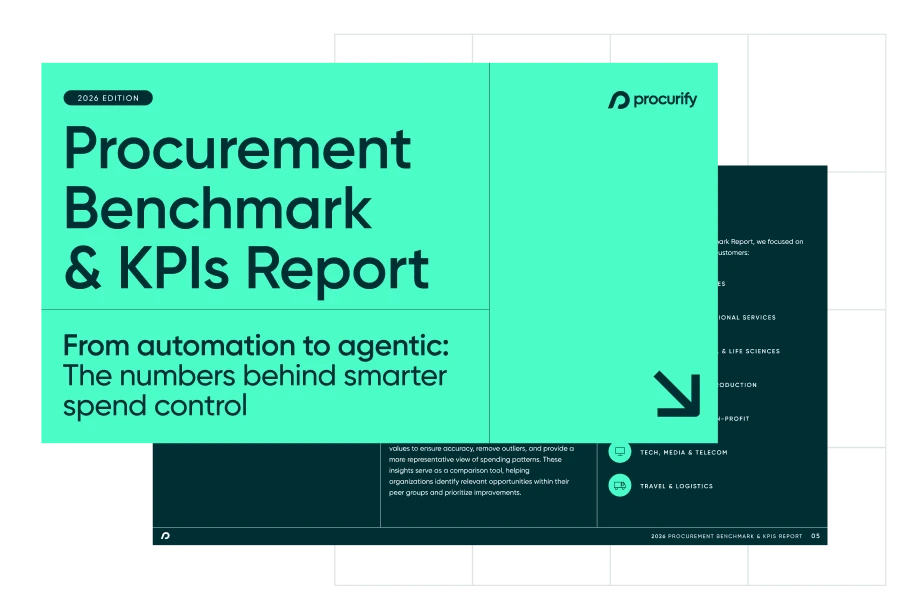
$30B+ in real spend data you won’t get anywhere else
Find out what it takes to move from reactive to AI-driven operations.


